
[DigitalToday Seung-a Yoo, intern reporter] Amazon has increased the number of satellites enough to begin initial service for its low-Earth orbit satellite internet service, Leo, by the end of this year.
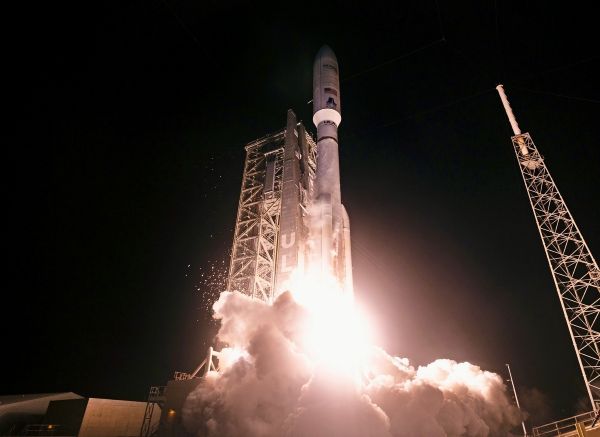
On July 2 (local time), Amazon launched 29 additional satellites, expanding the overall constellation to more than 390, according to foreign media including CNBC.
The launch used United Launch Alliance's Atlas V rocket. Chris Weber (크리스 웨버), Amazon vice president for Leo business and products, said in a post on X, formerly Twitter, that the current number of satellites is "enough to support continuous service across initial latitudes". Amazon plans to start initial service by the end of this year based on that.
Leo is the low-Earth orbit internet network Amazon is building to compete with SpaceX's Starlink. Amazon began an enterprise preview for some companies in November last year, but it has not yet rolled out services for general consumers and government customers. The initial commercial service is also likely to be limited to users in certain regions. Weber said future launches will "add coverage and capacity".
In the competitive landscape, the gap with Starlink remains large. SpaceX began Starlink in 2015, 4 years ahead of Amazon, and has about 10,000 satellites and more than 10 million subscribers. Amazon announced the Kuiper concept in 2019 and later changed the name to Leo.
Amazon ultimately aims to build a satellite network of about 7,700 satellites. A shortage of launch vehicles has slowed the project. When requesting an extension of the regulatory deployment deadline in January, Amazon cited a short-term launch-vehicle shortage as a factor outside its control. It signed major launch contracts in 2022 with ULA, Arianespace and Jeff Bezos (제프 베조스)' Blue Origin and later secured additional SpaceX launch slots, but multiple launch providers faced schedule delays.
In May, Blue Origin's New Glenn rocket also exploded on the launch pad during a ground-fired engine test at a stage just before it was to carry Amazon satellites. Blue Origin is restoring the launch pad and investigating the cause. Bezos and Blue Origin Chief Executive Dave Limp (데이브 림프) have previously said they aim to return New Glenn to flight by the end of this year. New Glenn is a partially reusable heavy-lift rocket that competes with SpaceX's Starship and can carry up to 45 tonnes of payload to low Earth orbit.
Amazon plans to use ULA's Vulcan medium-to-heavy rocket for the next Leo mission. Amazon explained that Vulcan will "help carry larger Leo payloads and increase the pace of deployment". Melissa Wuerl (멜리사 뷰얼), head of Leo launch systems, said in a statement that hundreds of satellites that have completed flight preparations are waiting at Cape Canaveral and that a dedicated vertical integration facility for Vulcan has also been set up, adding that the company has secured a clear path to quickly expand network coverage after initial service begins.
As a result, the next point to watch for Leo is not so much the initial service launch itself, but how much it can increase its launch cadence to expand limited regional service to nationwide and global levels. It has now met the conditions to begin service, but competitiveness will depend on additional launches and the pace of coverage expansion.
Last few launches were big for @AmazonLeo - bringing us to 390+ satellites deployed, enough to support continuous service across initial latitudes. Still lots of work ahead – including raising all these new satellites to their assigned altitude – but we’ve completed enough… pic.twitter.com/UZb404fXRq
 Seung-a Yoo
ysah@d-today.co.kr
Seung-a Yoo
ysah@d-today.co.kr