
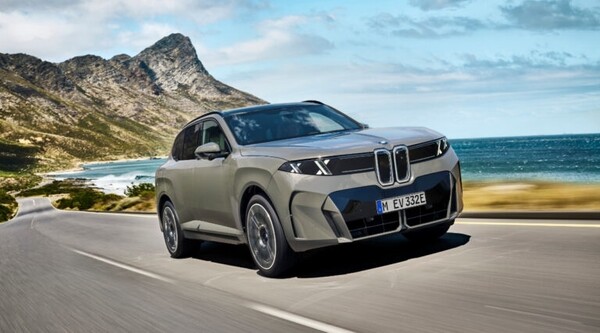
BMW will start producing the all-electric iX5 SUV early next year at its plant in Spartanburg, South Carolina. It will be the first time BMW produces electric vehicles outside Germany, as it moves to develop the United States into a key base for electrified production.
On July 1 local time, electric-vehicle outlet CleanTechnica reported that BMW plans to include the all-electric iX5 in its newly unveiled fifth-generation X5 lineup and begin full-scale mass production at its Spartanburg plant from the first quarter of 2027.
The production plan is an example of BMW's "Technology Open" strategy. The new X5 will be offered with up to five powertrain types: internal combustion engines, 48V mild hybrids, plug-in hybrids (PHEV), battery electric vehicles (BEV) and, later, hydrogen fuel-cell vehicles (FCEV). It is designed to allow flexible adjustments in the production mix as demand shifts by market and region.
The Spartanburg plant is one of BMW's key global production bases. Since it began operations in 1994, it has produced more than 7.3 million vehicles, and it assembled 412,799 X-series vehicles last year. About half of its output is exported to about 120 countries, and BMW has supplied a cumulative total of about 3 million vehicles from the United States to overseas markets alone. Total cumulative exports exceed $113 billion.
BMW is also expanding investment in the United States. It recently invested about $1.7 billion to modernise the Spartanburg plant and build battery production facilities. The company said it supports about 120,000 jobs based on more than 400 suppliers and more than 30 business sites in the United States, and generates more than $43.3 billion a year in economic effects.
It is also localising the battery supply chain. A new battery plant built nearby in Woodruff is set to produce battery packs using next-generation cylindrical cells. BMW plans to simplify the production process and cut manufacturing costs by adopting a Cell-to-Pack method that assembles cells directly into packs without modules.
Production technology will also be upgraded. BMW is applying its iFactory concept to the two plants, introducing digital twins and 3D virtual simulations to production lines. It also uses its AI-based quality management platform, AIQX, to analyse sensor and camera data in real time and immediately check for anomalies.
Humanoid robots are also being deployed on the shop floor. Figure AI humanoid robots have been placed at the Spartanburg plant to perform repetitive tasks or physically demanding work, while workers divide roles to focus on more precise processes.
BMW plans to roll out the new X5 in stages, starting with internal combustion engine models in October, then introduce the plug-in hybrid and the all-electric iX5 in the first quarter of 2027. It also plans to add a high-performance M Performance model and a hydrogen fuel-cell model, the iX5 Hydrogen, to complete its electrified lineup.
The industry views the decision to produce the iX5 in the United States as a symbolic turning point showing BMW's electrification strategy. Even as growth in the electric-vehicle market slows somewhat, the plan is to respond to market changes through a strategy that flexibly operates internal combustion, hybrid, electric and hydrogen vehicles within a single production system. Attention is focused on whether the U.S. plant can establish itself as BMW's global electrification hub.
 Jinju Hong
hongjj@d-today.co.kr
Jinju Hong
hongjj@d-today.co.kr