
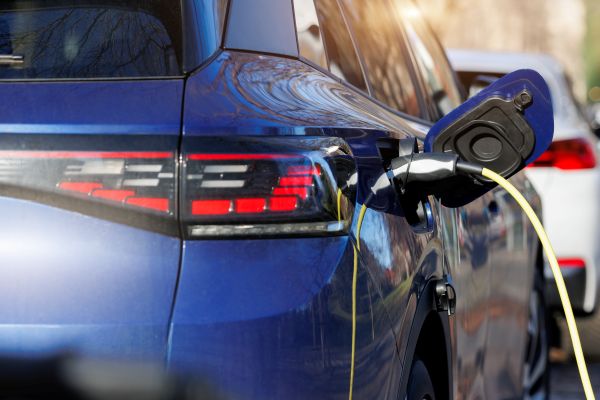
A study has found that expanding the rollout of electric vehicles could deliver major gains for public health, beyond responding to climate change.
On June 30 local time, IT outlet Ars Technica reported that the International Council on Clean Transportation released a report saying the United States could cut 108,400 early deaths and 42,100 new cases of childhood asthma by 2050 if it shifts its road transport system to zero-emission vehicles.
The report said broader adoption of electric vehicles could sharply reduce health damage by cutting air pollution as well as lowering greenhouse gas emissions.
The ICCT estimated that air pollution from road traffic in the United States causes more than 41,800 early deaths each year. Nitrogen oxides (NOx), carbon monoxide (CO), fine particulate matter (PM2.5) and volatile organic compounds (VOC) emitted from vehicle exhaust are known to increase risks of diseases including asthma, chronic obstructive pulmonary disease (COPD), ischemic heart disease, lung cancer and stroke.
The study was conducted jointly with the FIA Foundation, under the International Automobile Federation (FIA). The researchers forecast emissions through 2050 across road transport, covering passenger cars and light trucks as well as heavy freight trucks, buses, tractor-trailers and two- and three-wheeled vehicles.
The baseline scenario assumed current policies remain in place. The comparison scenario applied a condition under which all vehicles are converted to 100 percent zero-emission vehicles by 2045. Some regions also reflected conditions to fully electrify passenger cars by 2035 and heavy commercial vehicles by 2040.
The findings showed that high-income countries, including the United States, would see a substantial drop in NOx and particulate matter emissions even if they keep current policies. By contrast, low-income countries could see pollution increase by more than 50 percent because vehicle replacement is slow and emissions rules are relatively weak. It projected that the gap among countries would also narrow sharply if aggressive electrification policies are implemented.
The study found that a large share of health damage comes from heavy diesel commercial vehicles. Heavy freight trucks account for about 5 percent of all vehicles, but make up 36 percent of transport energy use, 60 percent of NOx emissions, 55 percent of PM2.5, and 65 percent of sulfur dioxide. Two- and three-wheeled vehicles account for 4 percent of total energy use, but were tallied as emitting 14 percent of PM2.5, 19 percent of VOC and 12 percent of CO.
The ICCT estimated that air pollution from the transport sector worldwide caused about 700,000 early deaths last year and led about 250,000 children to newly develop asthma. China had the most early deaths, and the United States recorded the highest level of new childhood asthma cases at about 23,100.
The report stressed that electrifying heavy freight trucks is key to maximizing the benefits of expanding zero-emission vehicles. Zero-emission heavy vehicles, including battery electric vehicles and hydrogen fuel cell vehicles, are increasing, but the pace of rollout lags that of passenger cars. Adoption of zero-emission heavy trucks in the United States reached 4 percent in the second half of 2025, and cumulative numbers through December last year were tallied at 72,308. That was an increase of nearly 20,000 from the end of 2024.
Rey Minjares (레이 민하레스), the ICCT's programme director, said, "Zero-emission freight transport is economically viable, especially in segments where health damage from diesel trucks is large." He added, "If policies that lower electric truck prices and expand adoption are put in place, it will be possible to achieve economic growth, energy savings and improved air quality at the same time."
The study presented the benefits of shifting to electric vehicles not only as expanding passenger car adoption, but as a wider transition of the entire road transport system that includes heavy commercial vehicles and two-wheelers. As a result, the practical outcomes of U.S. electrification policy are more likely to hinge not only on the passenger car market but also on the pace of truck replacement and regional regulatory levels.
 Jinju Hong
hongjj@d-today.co.kr
Jinju Hong
hongjj@d-today.co.kr