
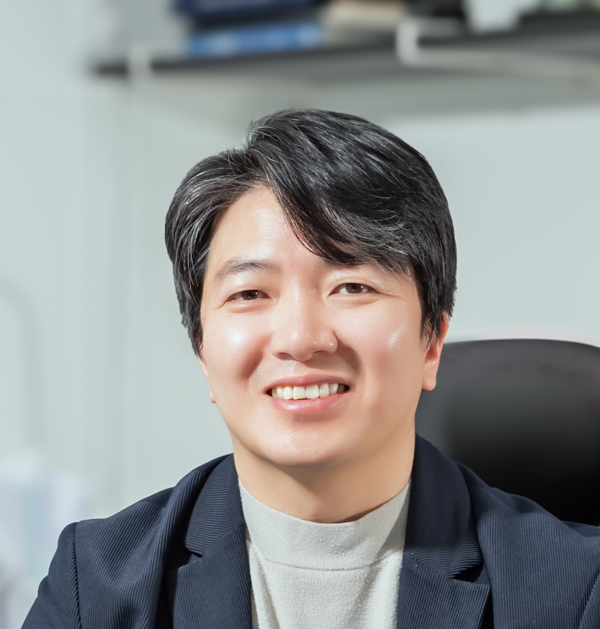
Roh Seong-hoon (노성훈), a professor in the Department of Biological Sciences at Seoul National University, has been selected as the July recipient of South Korea's Science and Technology Award for identifying how the cell cytoskeleton is formed and recycled.
The Ministry of Science and ICT and the National Research Foundation of Korea said on Tuesday they selected Roh as the July recipient of the award.
Roh identified the operating principle of a "chaperone regulator" that regenerates the cytoskeleton, opening a new chapter in research on ageing and neurodegenerative diseases. He focused on chaperone proteins that manage tubulin, a key cytoskeletal protein, and used cryo-electron microscopy to analyse the tubulin-chaperone binding process at atomic level.
The cytoskeleton is essential for maintaining cell shape, transporting substances and cell division. As ageing and disease progress, it can become damaged or unstable, and abnormalities in the cytoskeleton are known to be linked to neurodegenerative diseases, cancer and muscular disorders.
Roh found that multiple chaperone proteins form a large complex that selects and assembles only normal tubulin, while damaged or misassembled tubulin is broken down and recycled. He also said this showed for the first time in the world that the cytoskeleton is maintained not as a structure that is simply created, but by a "two-way quality control system" that continuously checks, repairs and recycles it.
The research has been assessed as expanding the scope of cytoskeleton studies from structure formation to regeneration and repair mechanisms. It is expected to be used in treatment strategies for related diseases such as dementia and cancer, and in regenerative medicine research.
Roh has built a cryo-electron microscopy research platform in South Korea based on support from the ministry's Basic Research Program and Bio and Medical Technology Development Program. Research identifying the dynamic process of protein folding was published in the international journal Cell in 2022, and research on the 3D structure of Dicer, an RNA-cleaving enzyme, was published in Nature in 2023. The award-winning research results were published in the international journal Science in October last year.
Roh said, "It is deeply meaningful in that we built the foundation for cryo-electron microscopy research in Korea and used it to produce world-class results." He added, "I will continue research that contributes to understanding ageing and disease by revealing the fundamental principles of life phenomena."
 Jin-ho Lee
jhlee26@d-today.co.kr
Jin-ho Lee
jhlee26@d-today.co.kr