
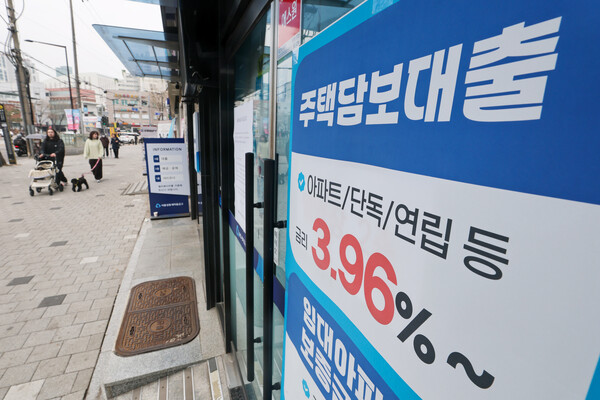
As Dongtan district in Hwaseong, Giheung district in Yongin and the city of Guri in Gyeonggi Province are additionally designated as regulated areas, mortgage lending rules in those areas will be tightened. From July 1, the mortgage loan-to-value ratio is set to fall to 40 percent from 70 percent, raising the lending bar.
The Financial Services Commission said on Monday it held a joint inter-agency "household debt inspection meeting" chaired by Deputy Secretary-General Jin-chang Shin (신진창) and discussed measures to strengthen lending regulations following the additional designation of regulated areas.
The meeting was attended by the Ministry of Land, Infrastructure and Transport, the Bank of Korea, the Financial Supervisory Service, the Korea Federation of Banks, associations representing non-bank financial institutions, and the five major commercial banks. Participants assessed that, as volatility in home prices has been widening in some areas such as the semiconductor belt, applying stronger lending rules could help cool market overheating to some extent.
Under the measures, stronger lending regulations will apply immediately from July 1 to Dongtan, Giheung and Guri, which were designated as regulated areas. For mortgages in regulated areas, the LTV falls to 40 percent from 70 percent under the non-regulated standard. Eased LTV ratios apply to first-time home purchases and policy mortgages, among others.
Jeonse loan rules will also be tightened. Jeonse loans will be restricted for borrowers who hold such loans and acquire an apartment priced above 300 million won in a regulated area, and for jeonse loans held by those who acquire an apartment priced above 300 million won in a regulated area.
Borrowers with credit loans exceeding 100 million won will be restricted from buying a home in a regulated area for 1 year from the date the loan is executed. Additional home purchases will also be restricted when a one-home owner in a regulated area takes out intermediate payment loans and relocation expense loans during reconstruction and redevelopment.
Home purchases through business loans will also be restricted. Business operators other than those engaged in home sales and leasing will not be able to receive business loans in the form of mortgages for the purpose of buying a home in a regulated area.
Borrowers will be subject to the previous rules if, by Monday, the day before the effective date for the regulated areas, their loan applications were fully received in financial companies' systems, or if they signed a home purchase contract and can prove payment of the deposit.
Shin said that as stronger lending rules take effect immediately, active cooperation across the financial sector is needed to avoid confusion on the ground. He stressed that associations and financial companies should thoroughly prepare through frontline staff training, checks of IT systems and customer guidance.
Financial authorities also plan to strengthen household debt management. He said household debt has continued to rise recently, driven mainly by other loans. He said authorities will respond more actively, including through on-site inspections if necessary, toward financial companies that continuously fail to comply with management targets.
 Ji-young Lee
ljy@d-today.co.kr
Ji-young Lee
ljy@d-today.co.kr