
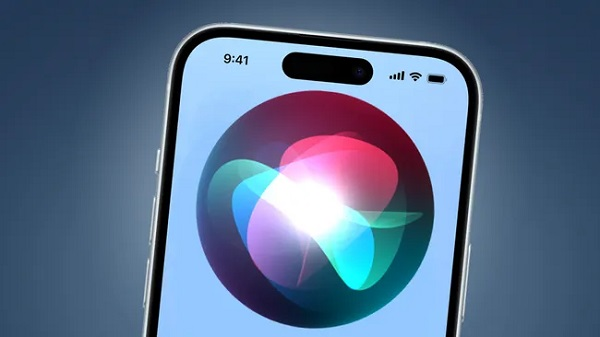
[Digital Today reporter Jinju Hong] As Apple unveiled its next-generation Siri AI at its Worldwide Developers Conference (WWDC), it also applied artificial intelligence (AI) across frequently used everyday features such as Safari, Shortcuts, the Photos app, AirPods and parental controls. The industry is assessing that these daily-life AI functions, rather than a conversational Siri, could raise users' perceived usefulness more.
Apple unveiled a range of AI features across its operating systems at this WWDC, including the new Siri. The biggest change is a complete redesign of Siri. The new Siri is designed to understand what is shown on screen and use personal data across apps to hold more natural conversations. Apple also unveiled it so it can function as the default assistant on iPhone and Mac, and also be used as a standalone Siri AI app.
The announcement also drew attention to smaller improvements that are used more often in practice than major AI features. In that context, IT media outlet TechRadar on June 29 introduced five small changes from this WWDC that deliver a strong user impact but were overshadowed by the major AI announcements.
First, Safari in macOS Golden Gate uses Apple Intelligence to automatically organise open tabs by topic. Apple introduced this as the "Topics" feature. For example, when preparing a trip, it automatically groups tabs related to flights, hotels and attractions and suggests themes such as the destination name, reducing the burden of tab management.
Shortcuts also becomes simpler. Previously, users had to design automation rules themselves, but in the new version, AI automatically creates a shortcut when a user describes the desired task in natural language. It is intended to make it easier to automate repetitive tasks such as resizing images, extracting text from PDFs and creating schedules.
AI editing features in the Photos app have also been strengthened. The existing "Clean Up" feature has been improved so it can remove distractions more naturally even in photos with complex backgrounds or heavy texture. It is also being expanded to apply to old photos and photos taken with devices other than an iPhone.
A new "Extend" feature naturally fills in empty space with AI when changing a photo's aspect ratio or expanding the background. The "Reframe" feature supports readjusting a photo's composition after it is taken, as if changing the camera angle.
Personalisation features are also being added to AirPods. AirPods Pro 2, AirPods Pro 3 and AirPods 4 will offer a custom equaliser that lets users adjust bass, midrange and treble themselves. A key feature is that users can tune audio to their preferences instead of using Apple presets.
Parental controls have also been strengthened. A new "Ask to Browse" feature supports allowing children to request a parent's approval before accessing a specific website. An "Ask to Buy" feature is also provided, and a new option is added so parents can directly set usage time for games, entertainment and social media. Apple plans to make the process of managing children's accounts simpler through these changes.
TechRadar assessed that the features unveiled at this WWDC are not simply aimed at adding AI but focused on improving real usability. It analysed that while the new Siri is at the centre of Apple's AI strategy, daily-used functions such as automatic tab organisation, photo editing and automation could deliver a bigger perceived impact.
The industry is assessing that Apple's AI strategy is expanding beyond competition in giant conversational assistants to improving everyday experiences such as organising, editing and automation. A key point to watch is not only the performance of the new Siri but also how much these everyday AI functions can actually change the user experience.
 Jinju Hong
hongjj@d-today.co.kr
Jinju Hong
hongjj@d-today.co.kr