
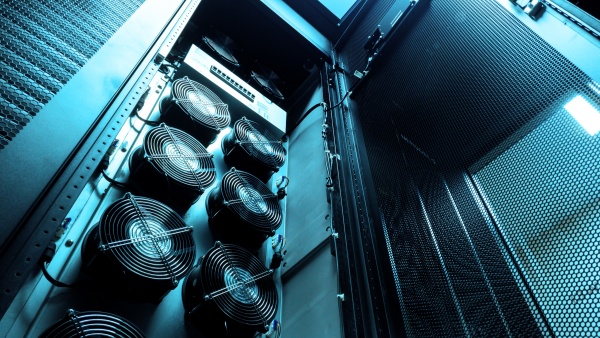
Omen AI has raised $31 million in a Series A funding round, pitching technology that analyses the condition of AI data center cooling water in real time. As AI infrastructure expands and liquid-cooling management grows in importance, it aims to detect cooling-water abnormalities early and reduce downtime that can run into millions of dollars.
TechCrunch reported on Sunday that the round was led by Nava Ventures, with participation from CRV, Vanderbilt University, Mann+Hummel, Starhill Holdings and Hard Yards Capital. Executives from Bridgestone, GM, Johnson Controls and TensorWave also invested in a personal capacity.
The issue Omen AI is trying to solve is liquid-cooling systems in AI data centers. AI data centers have been rapidly expanding the use of liquid cooling to maximise GPU performance.
Operators often increase the water content in cooling fluids to boost cooling efficiency, but that can also raise the risk of bacterial growth. If the cooling water becomes contaminated, it can clog piping and cooling-system flow. Fixing it requires shutting down a rack for about 5 to 6 hours for cleaning. Industry officials say losses from that process can reach millions of dollars.
Omen AI plans to address the problem by using an ultra-compact spectrometer to analyse the chemical condition of cooling water in real time. Chief Executive Jack Laberge (잭 라베르지) said that without real-time visibility into chemical changes inside the cooling water, operators ultimately have no choice but to accept large-scale downtime. He said the company's technology can detect bacterial growth at an early stage.
The company originally started in fluid monitoring for construction equipment. Laberge founded his first company in 2020 at age 14 and raised about $3 million for a construction-equipment sensor business. After that business ended, he founded Omen AI in 2024 and initially developed technology that analyses fluid conditions inside construction machinery to indicate maintenance timing. The sensor was designed to analyse not only bacteria but also copper and chromium to detect pump wear, and silicon to detect seal damage.
The catalyst for shifting the business toward data centers was Caterpillar's distribution network. Caterpillar dealers were early customers, and the company found new demand because Caterpillar also runs a gas turbine and generator business for powering data centers. Laberge said dealers began applying sensors to power-generation equipment from about 6 months ago. He said the potential of the data center market was confirmed after they asked whether the application could be expanded to building facilities.
The company then focused on the fact that data centers are made up of various fluid systems, including HVAC systems and chip-cooling equipment, and expanded the business by making that its core market. Omen AI is working with about 12 data center customers. The customer list includes TensorWave, which operates an AMD-based AI cloud.
TensorWave President Piotr Tomasik said that in large-scale AI systems, fluid condition is an important variable but the industry is not managing it sufficiently. He said he expects more precise monitoring to help improve the operational efficiency of computing infrastructure.
Investors also focused on the pace of customer acquisition, in addition to the technology. Cory Rellas, a partner at Nava Ventures, said it is rare for a young founder to win the trust of major customers in a short time in conservative industries. He said the technology was quickly validated through actual customer acquisition. Since being founded in 2024, Omen AI has raised a cumulative total of about $40 million, including this round.
Competition is also intensifying. Many data centers currently collect cooling-water samples and analyse them in laboratories, but the market for real-time, on-site analysis is also growing quickly. Water-quality monitoring company Physis recently entered the market by launching a monitoring solution dedicated to data center cooling water.
Omen AI said recent advances in optical sensors and signal-processing technology have made real-time analysis possible. Laberge said hardware costs have fallen enough to allow large-scale deployment. He also said signal-processing technology has advanced to a level where it can extract meaningful data amid noise.
Industry officials say the spread of AI data centers is increasing the adoption of liquid-cooling systems, raising the likelihood that real-time cooling-water management will become a new competitive edge in data center operations.
 Jinju Hong
hongjj@d-today.co.kr
Jinju Hong
hongjj@d-today.co.kr