
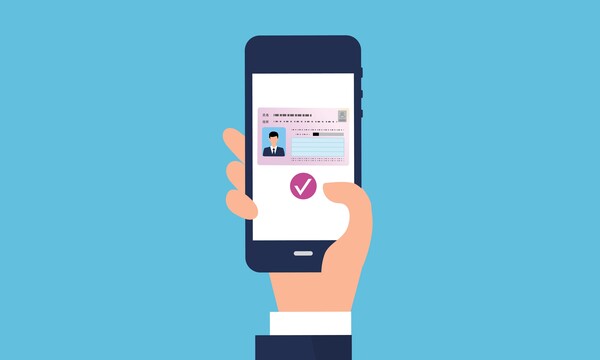
From next month, stronger identity verification procedures, including facial recognition, will apply when opening a new mobile phone line or porting a number through mobile operators and MVNOs.
The Ministry of Science and ICT on Monday announced a comprehensive plan to prevent fraudulent mobile phone use to stop identity theft and the activation of so-called illegal phones.
The plan focuses on blocking identity theft, identity lending and misuse of corporate names at the phone activation stage, and on strengthening sanctions against operators and retailers found to have enabled fraudulent activations.
Facial recognition to be applied first to new sign-ups and number porting
Starting July 6, the ministry will phase in facial recognition across in-person and non-face-to-face activation channels of the three mobile operators and MVNOs. It will apply first to new subscriptions and number porting. Device changes that only replace a handset with the same carrier are excluded from the initial rollout.
During the phased implementation period, users who choose facial recognition must attempt verification at least once and up to three times. Even if verification fails, activation is allowed if identity is confirmed through other means such as a mobile ID or a resident registration transcript and the processing record is kept.
Smartphone users can use the mobile ID application provided by the Ministry of the Interior and Safety as an alternative verification method. Users without a smartphone or who have lost their device can submit a resident registration transcript issued on the same day. This reflects improvement recommendations from the Personal Information Protection Commission and the National Human Rights Commission of Korea.
In August, the ministry will review additional alternatives, referring to non-face-to-face real-name verification methods used by financial institutions. In September, it plans to automatically link the authenticity verification procedure for resident registration transcripts to its system. In October, it will revise the enforcement decree of the Telecommunications Business Act to clarify the legal basis for facial recognition and standards for sanctions on operators for fraudulent activations.
Subscription-limiting anti-identity-theft service to be provided by default from November
From November, a subscription-limiting option within the identity-theft prevention service, which users previously had to apply for separately, will be provided by default when signing a mobile phone contract. If the subscription-limiting service is set, additional mobile phone activations under the user's name are blocked until the user lifts the restriction.
Controls on mobile phones registered under foreign nationals' names will also be tightened. Related systems will be improved to verify the authenticity of foreign registration cards and passport photos, and foreign nationals' mobile phone activations will be limited to one line per person in principle. If additional lines are needed, a separate explanation process is required.
The ministry will also respond to so-called "durable goods loans," in which people open mobile phone lines and hand them over in return for loans or high-paying part-time work. From October, operators must inform phone subscribers about the illegality of lending names and the possibility of punishment. Activation will be restricted for high-risk users who open multiple expensive devices on instalment plans over a short period.
For corporate phones, business registration certificates and corporate registry information will be cross-checked to block fraudulent activations using dormant or closed companies or stolen representative names. Some businesses deemed at high risk of default will be required to register the actual user of a corporate phone, and a multi-line cap will apply, limiting activations in principle to up to four lines over 180 days.
The ministry is also pursuing sanctions against operators involved in fraudulent activations. It is proceeding with procedures to suspend business operations for three MVNOs - Youngjin Telecom, Chingu I&C and Hanpass International - for fraudulent activations including foreign nationals' prepaid phones. It will seek to cancel the registration of internet telephony operator Onse Tel Link within July for falsely displaying 02 and 070 numbers as post office numbers. It plans to continue joint inspections in the second half targeting vulnerable areas such as MVNOs and text-message relay firms.
Choi Woo-hyuk (최우혁), director general for Information Security Network Policy at the ministry, said strengthening identity verification at the activation stage is a preventive measure to protect people's assets and identities at a time when illegal phones are becoming a key tool in various crimes affecting livelihoods. He said the ministry will effectively prevent such phones while ensuring users' choice and convenience.
 Jin-ho Lee
jhlee26@d-today.co.kr
Jin-ho Lee
jhlee26@d-today.co.kr