
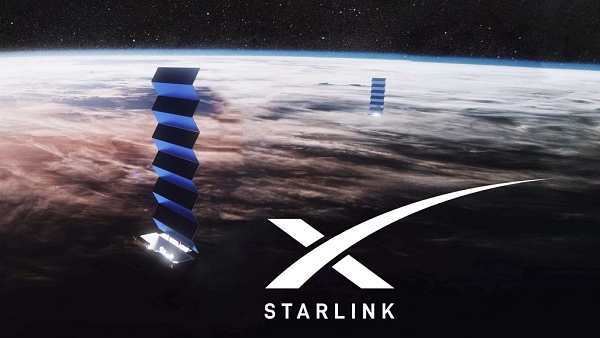
SpaceX is known to be considering launching its own mobile service for U.S. consumers.
According to online media outlet GizChina on June 29 local time, SpaceX held executive-level talks with U.S. cable TV operator Charter Communications on pushing a consumer mobile business.
The focus of the talks is the expansion of a Starlink-based mobile business. SpaceX currently operates Starlink, a low-Earth orbit satellite internet service, and provides a "Direct to Cell" service in cooperation with U.S. mobile carrier T-Mobile, enabling smartphones to connect directly to satellites.
But the talks reportedly focused on a plan for SpaceX to directly operate a consumer mobile service under its own brand, going beyond partnerships with carriers.
If the business materialises, SpaceX would compete directly with the top three U.S. mobile carriers, Verizon, AT&T and T-Mobile. SpaceX and Charter Communications are also known to have discussed using Charter's existing telecom infrastructure in the process of building the service. That is interpreted as a strategy to cut costs and time to enter the market by using existing facilities rather than building a new nationwide network from scratch.
Starlink's mobile business is expanding rapidly. Since starting Starlink service in the United States in 2020, SpaceX has expanded its service coverage to North America, Europe, Oceania and Asia. In the early stages, a dedicated satellite antenna was required, but the service structure changed significantly in 2024 when it launched satellites capable of communicating directly with smartphones. It later commercialised the Direct to Cell service, which enables direct satellite connections on regular smartphones, in cooperation with T-Mobile.
Similar services are also spreading overseas. In Japan, KDDI's au started "au Starlink Direct" in April 2025, and NTT Docomo also launched "docomo Starlink Direct" in April 2026. SoftBank has also flagged plans to introduce a related service.
Still, if SpaceX wants to provide mobile services directly overseas, it would need to secure mobile business permits and spectrum licences in each country separately from its existing Starlink business, and the difficulty of expansion is expected to be higher.
Securing spectrum is also cited as a challenge. SpaceX recently secured eligibility to participate in U.S. spectrum licence auctions, and is known to have obtained spectrum rights worth about $8.4 million in the Cincinnati area and about $84,200 in the Gulf of America area.
But its spectrum holdings are far short of those of existing carriers such as Verizon, AT&T and T-Mobile, and the investment needed to build an independent nationwide telecom network is also expected to be substantial.
That is why some in the industry also interpret the move as a strategic card to boost negotiating power with existing carriers rather than preparations to enter the market.
Elon Musk (일론 머스크) has also mentioned the possibility of co-existence with existing carriers. Asked at last year's "All-In Summit 2025" whether Starlink would replace existing mobile carriers, Musk said, "Other carriers will continue to exist because they hold far more spectrum bands," adding, "Starlink will not drive other operators out of business."
The industry sees a key question ahead as whether SpaceX will stop at expanding its existing partnership model, or launch its own consumer telecom brand to make a full entry into the U.S. mobile market, as satellite-based direct-to-smartphone connection technology has already entered the commercialisation stage.
 Jinju Hong
hongjj@d-today.co.kr
Jinju Hong
hongjj@d-today.co.kr