
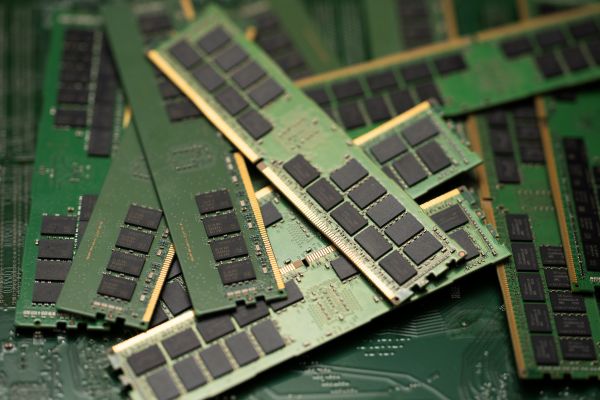
Rising memory prices are expected to lift the cost of IT devices including smartphones, PCs, TVs and tablets by at least 15 to 40 percent. The situation is spreading beyond a single component to higher shipment prices for finished devices.
According to the industry, the DXI, a composite index of spot memory prices, was up 4.9 percent in a week as of the 12th and has risen 16.0 percent over the past month. DDR5 16Gb rose 3.3 percent on the week, and NAND MLC 64Gb jumped 30.8 percent over a month.
The outlook for higher prices is not new. There were many similar forecasts last year, but it passed without major disruption. A key factor was that demand for traditional devices such as PCs and smartphones did not recover as much as expected. Finished-device makers also built inventories before prices rose and then delayed additional purchases, which also eased upward pressure.
But an assessment is emerging that this year is different. In the past, supply tended to follow when prices rose, blunting the uptrend. This time, production capacity has shifted toward AI data centres and high-bandwidth memory, structurally tightening supply of general-purpose memory. With supply unlikely to catch up easily even as prices rise, some observers say this rally may not be a one-off.
According to SK Securities, semiconductors accounted for 53 percent of the bill of materials for a flagship smartphone last year. The application processor (AP) made up 28 percent, while memory and communications components were each around 12 percent. Displays were 15 percent, cameras 11 percent, internal and external materials 7 percent and other items 15 percent. With semiconductors making up more than half, the firm said the impact on device costs is that much more direct if memory and AP prices rise at the same time.
Memory prices in particular are likely to rise by triple-digit percentages, with the possibility of additional increases also being discussed. Prices for APs, communications modules and substrates are also set to rise at least 20 to 30 percent and could climb more than 50 percent.
Other components outside semiconductors also have little room to fall in price. Display and camera unit prices have limited declines due to ongoing specification upgrades. Internal and external materials face a heavier burden from rising metal prices, and auxiliary materials are pressured by higher chemical raw material costs. Batteries also face significant unit-price pressure due to metal costs. Tariff burdens add to that. Aside from some products such as Apple iPhones and South Korea-made Galaxy devices, many finished devices fall within the scope of tariffs.
◆ Apple boosts output, Samsung and China cut production
The memory shortage is affecting new product design. Apple recently unveiled its 20 billion-parameter on-device AI model, 'AFM3 Core Advanced,' at the Worldwide Developers Conference (WWDC). The model stores all weights in NAND and then loads only the parameters needed for each prompt into dynamic random access memory (DRAM) to run. This is designed to reduce DRAM capacity, cost and power burdens, and is seen as a second-best option in a situation where sufficient memory cannot be secured.
The faster edge and on-device AI spreads, the more memory demand rises. Eugene Investment & Securities said demand for AI and semiconductors is already strained even to support data centres, and predicted bottlenecks and the effect of rising prices will spread to high-performance equipment and materials.
Responses among finished-device makers are diverging. In smartphones, for example, strategies are splitting between Apple, which is seeking to gain market share while minimising selling-price increases on the back of high profitability, and competitors turning conservative due to cost burdens. According to SK Securities, Apple has entered a production increase by raising iPhone shipments to 250 million units this year from 240 million units last year. The possibility of an additional production increase of more than 5 percent in 2027 is also being discussed. By contrast, Samsung Electronics' Galaxy is expected to see sales decline, and Chinese makers are planning production cuts of 20 to 35 percent.
An industry official said, "It is a structure in which someone among consumers, finished-device makers, component makers and raw material suppliers has to shoulder the cost increases," adding, "The supply of memory, a component with a clear shortage, will become increasingly tighter."
 Daegeon Seok
d2dg@d-today.co.kr
Daegeon Seok
d2dg@d-today.co.kr