
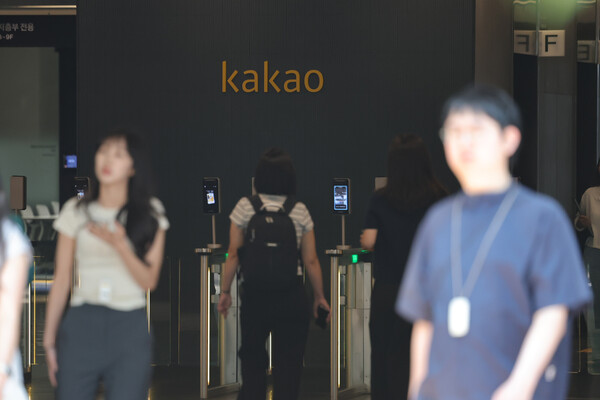
Kakao's labour union held a 'Logout Day' on June 29, citing difficulties in negotiations over the performance bonus compensation system. No disruptions occurred across major services such as KakaoTalk and KakaoPay.
The Kakao branch of the Korean Federation of Chemical, Textile and Food Industry Trade Unions, known as Crew Union, held the Logout Day for union members at five entities: Kakao, KakaoPay, Kakao Enterprise, DK Techin and XL Games. Members stopped work by taking annual leave or a day off and logging out of internal work systems. It covered the full day with no separate start or end time, and there was no offline rally or separate statement.
It was the second industrial action following a four-hour half-day partial strike on June 10.
Labour and management differed on the participation tally. The union said about 2,100 people had applied to participate as of June 28, and that there were additional applicants on the day, though it did not provide a separate count. Management, meanwhile, estimated about 800 actual participants at headquarters.
A Kakao official said it was difficult to distinguish between people on leave and those joining the strike in the system. The official described the estimate as based on the number of people on leave on similar past workdays.
The impact on services was limited. The industry had expected disruptions in service response given the all-day work stoppage format. But no notable outages or user inconvenience were confirmed on key services such as KakaoTalk and KakaoPay. The assessment was that a day-long industrial action did not directly lead to service suspension because major services operate with around-the-clock staffing and an incident response system. No service outages occurred during the earlier strike either, when about 1,000 people at headquarters and about 1,500 people across five entities participated.
A Kakao official said it was operating a real-time response system to ensure stable service operation and minimise customer impact. The official said the company would continue talks and consultations with the union to reach an agreement quickly.
The labour dispute stems from the performance bonus compensation system. The union is demanding a performance bonus worth 10 million won, equivalent to 13 to 14 percent of operating profit, and separate RSUs worth 5 million won. Management proposed a pool for performance compensation including RSUs, but the union said the amount was about 10 percent of operating profit and fell short of its demand. The sides have failed to find common ground since talks broke down in May. Union members at affiliates are also demanding steps to ease job insecurity stemming from spin-offs and sales, adding to the negotiating agenda.
The union said it was discussing its future response methods and that negotiations with management were continuing.
 Lee Ho-jung
lhj@d-today.co.kr
Lee Ho-jung
lhj@d-today.co.kr