
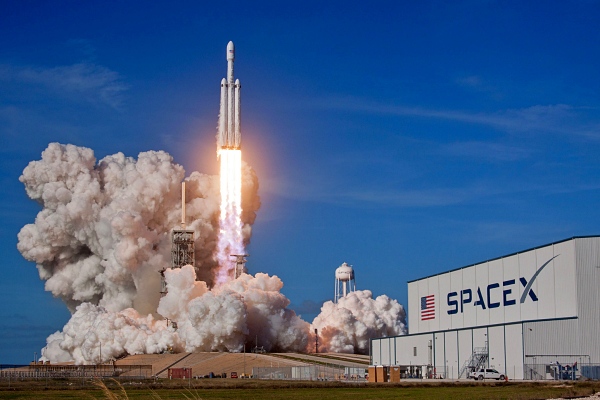
SpaceX is moving to build its own natural gas pipeline connecting to its Texas launch base to supply fuel for its next-generation Starship spacecraft. It is seen as part of a strategy to secure fuel infrastructure to sharply increase Starship launches and to directly control its supply chain.
On June 26 (local time), online media outlet Gigazine reported that SpaceX is pushing to build a natural gas pipeline about 13 km long called Starpipe.
The plan was confirmed through documents that SpaceX affiliate Lone Star Mineral Development submitted to the Texas Railroad Commission. The documents include a plan to build a pipeline supplying gas from a natural gas facility to SpaceX's company town, Starbase, in Texas.
The project aims to stabilise Starship fuel supply. Starship uses about 2.4 million litres of liquid methane per launch. Hundreds of tank trucks currently transport the fuel over several hours, and critics have said this limits efforts to shorten the interval between launches.
SpaceX has already conducted 12 Starship test flights since 2023, but its long-term goals are far larger. The company plans to increase launches from dozens to hundreds a year, and ultimately to the thousands. It has also recently presented a plan to launch up to 1 million satellites by the end of 2027.
Starpipe is being designed as infrastructure to support those goals. According to the submitted materials, the pipeline will have a diameter of 16 inches, about 406 mm. It is designed with transport capacity beyond the fuel volume needed for the 25 Starship launches a year currently approved by the U.S. Federal Aviation Administration (FAA).
The industry is interpreting this as SpaceX building fuel infrastructure not merely to meet current launch demand, but with far more launches in mind.
A strategy to internalise the supply chain is also expected to strengthen. SpaceX is reportedly reviewing its own natural gas production business in addition to building the pipeline. It is searching for candidate sites across Texas, and it has reportedly signed more than 100 oil and gas lease contracts with local landowners since 2023.
This is also drawing attention as a case of a space company expanding its business directly into the domain of existing energy companies. Reuters, cited by Gigazine, assessed that natural gas production and pipeline operation have traditionally been handled by energy companies, and that SpaceX's moves show the company's long-term strategy of directly controlling core supply chains as much as possible.
In the longer term, expansion of its satellite business is also cited as a backdrop to investment in fuel infrastructure. In a new investment prospectus, SpaceX has presented a plan to operate thousands of solar-based AI-dedicated satellites in the future. It also included a projection that the satellites' total generation capacity could reach about 20 percent of output from the U.S. power grid.
The industry sees Starpipe as not just a gas pipeline but as core infrastructure to support a high-frequency Starship launch system. Key variables expected to shape SpaceX's next-generation space transport strategy include future regulatory approvals, the actual construction schedule and whether it expands its own natural gas procurement business.
 Jinju Hong
hongjj@d-today.co.kr
Jinju Hong
hongjj@d-today.co.kr