
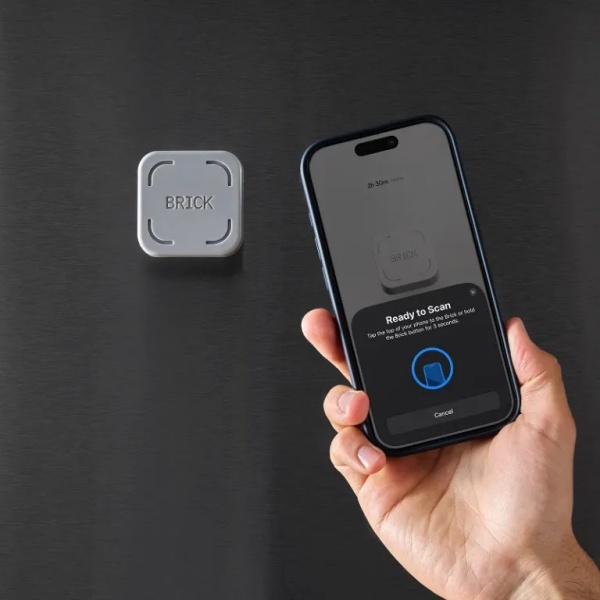
A small device called Brick is drawing attention for users looking to cut smartphone screen time by linking app blocking to a physical action. It goes beyond simply turning off notifications or limiting apps. To lift a block, users must find the device and tap their phone on it.
On June 24, TechCrunch reported that startup Brick introduced a product that limits smartphone app use through a magnetic device equipped with near-field communication (NFC).
Brick’s biggest feature is adding “physical friction” to unblocking apps. Existing Screen Time or Digital Wellbeing features can be easily bypassed if users change settings or ignore notifications. With Brick, users must travel to where Brick is kept and touch the smartphone to the device to use blocked apps such as Instagram again. The company explained that this structure helps reduce the habit of unconsciously picking up a smartphone.
Brick co-founder Zach Nasgowitz (잭 나스고위츠) said the product started from his own experience. “My phone was interfering too much with daily life, but existing software-based solutions were not enough,” he said, adding that he ultimately decided to make the product himself.
Brick is designed to let users set multiple blocking modes depending on the situation. For example, at 10:30 p.m., “sleep mode” is activated automatically and most applications are blocked except messaging and audio apps. Even after waking up in the morning, users cannot immediately open social media or other apps unless they go to where Brick is located.
Brick co-founder TJ Driver (TJ 드라이버) said, “With software alone, users can easily bypass restrictions,” and added, “To be effective, you need friction that makes users think one more time.” He added that the process of having to move directly to the device to use apps again helps shift unconscious behavior into a deliberate choice.
The device also includes safeguards for exceptions. Brick provides a limited number of “emergency unlock” uses for situations that are essential while out, such as navigation or ride-hailing. It also lets users decide which apps to exclude from blocking.
The company said Brick takes a different approach from so-called “dumb phones,” which have been gaining attention recently. That is because an environment is already in place where smartphones are essential for mobile payments, transportation, ticket checks and work authentication apps, making it difficult to go back to feature phones. Brick’s strategy is to offer a compromise that reduces unnecessary app use while keeping only necessary functions without giving up smartphones entirely.
Nasgowitz also introduced real-world use cases. One user said they needed to keep using KakaoTalk to stay in touch with family and friends in South Korea, but after using Brick, their smartphone changed into the form they wanted, used mainly for texts, calls, taking photos and KakaoTalk.
The company places the product’s core value on “restoring control.” Driver said, “The goal is not to reject technology, but to help users control smartphone use themselves and use it intentionally.” Brick plans to target the market as a new digital wellbeing tool that helps users manage digital habits to fit the time and situation they want, rather than replacing the smartphone itself.
 Jinju Hong
hongjj@d-today.co.kr
Jinju Hong
hongjj@d-today.co.kr