
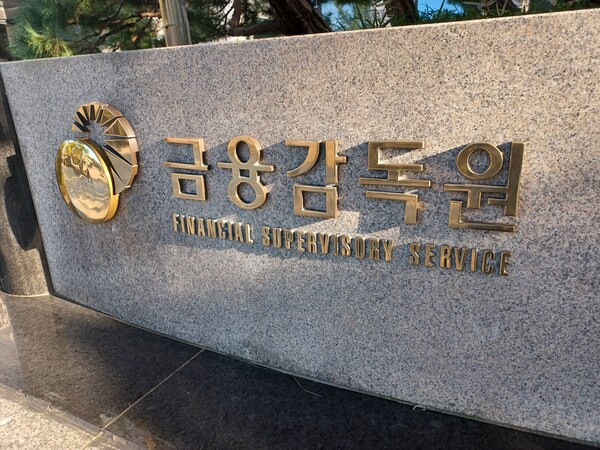
[Digital Today reporter Ji-young Lee] South Korea's Financial Supervisory Service will strengthen procedures for opening and closing flexible savings accounts to prevent online goods-trade fraud that exploits the accounts.
The FSS said on Tuesday it will improve flexible savings-related systems at banks and smaller financial institutions to protect consumers from online goods-trade fraud.
Unlike demand deposit accounts, flexible savings accounts can be opened in large numbers in a short period. As a result, cases have emerged in which fraudsters open multiple flexible savings accounts remotely, receive deposits from an unspecified number of victims and then withdraw cash by closing the accounts early.
Authorities confirmed a case in which a fraudster posted a fake sales listing on an online secondhand trading platform and then opened 32 flexible savings accounts over three days to swindle 126 victims of 120 million won.
Under the changes, each financial company will limit flexible savings account openings to a maximum of three per person per quarter, including accounts closed early. Consumers who want to open additional accounts can do so by visiting a branch.
Procedures for closing accounts will also be tightened. If an account is closed within three business days of being opened, it will be allowed only through a branch visit.
Products deemed less likely to be misused for crime can be used as before. Products with a monthly payment limit of 1 million won or less, or products that allow payments only from the customer's own account at the same financial company, can be opened and closed freely.
Anti-money laundering responses will also be strengthened. Banks and smaller financial institutions such as savings banks must actively obtain fraud victim information and, when a flexible savings account is suspected of being used for online goods-trade fraud in connection with their abnormal transaction detection systems, carry out enhanced customer verification. The FSS said it plans to encourage them to establish monitoring systems as well.
Banks and smaller financial institutions plan to implement the improvements during the third quarter after changing business procedures and IT requirements related to opening and closing flexible savings accounts.
The FSS plans to share cases that raise money laundering concerns involving flexible savings accounts and to inform financial companies of the need to strengthen internal control systems for anti-money laundering.
 Ji-young Lee
ljy@d-today.co.kr
Ji-young Lee
ljy@d-today.co.kr