
Alibaba has moved to expand investment in AI semiconductors by more than tripling the registered capital of its chip unit, T-Head.
Hong Kong's South China Morning Post reported on Monday that T-Head increased its registered capital to 1 billion yuan from 300 million yuan last week.
The capital increase coincides with Alibaba's push to build its own chip capabilities in line with the AI boom and China's drive for semiconductor self-reliance. It is the first capital injection into T-Head in about three years. T-Head previously raised its registered capital to 300 million yuan from 10 million yuan in early 2023.
Alibaba has recently put chips at the center of its AI strategy. The company reiterated its plan to build a full-stack AI infrastructure by combining custom semiconductors designed by T-Head with Alibaba Cloud and Qwen-based models. It aims to strengthen a structure that ties together cloud, models and semiconductors, beyond chip development alone.
T-Head was founded in 2018 and kept a low public profile for some time. This year, Alibaba has been mentioning T-Head more frequently in public. Alibaba CEO Eddie Wu (우융밍) first referred to T-Head in a March earnings discussion and said its in-house graphics processing unit had entered the mass production stage. He also indicated that T-Head is accelerating product development to meet growing demand for AI computing from external customers as well as internal needs.
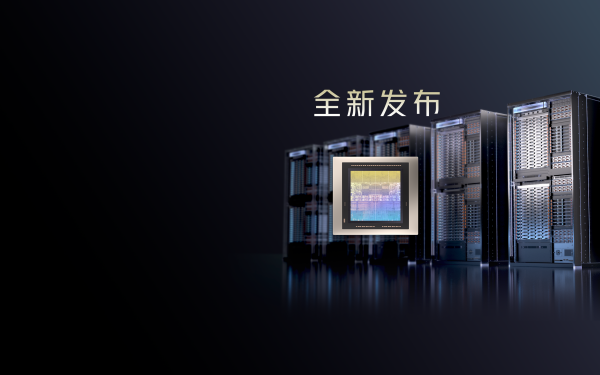
T-Head has also disclosed product competitiveness. In January, it introduced the "Zhenyu 810E," an application-specific integrated circuit aimed at both AI training and inference, and said it delivered performance similar to Nvidia's H20. The H20 is a GPU adjusted for the China market to reflect U.S. export restrictions. In May, it unveiled the "Zhenyu M890," an AI accelerator tailored for complex agentic AI tasks, and claimed it offered three times the performance of the Zhenyu 810E.
Alibaba has also provided shipment figures. It said that as of April it had supplied 560,000 Zhenyu chips to more than 400 customers across 20 industries. The customer base included carmakers and financial services firms. That shows Alibaba is pursuing external sales as well as securing chips for its own services.
The capital injection also coincides with plans to spin off T-Head. Alibaba is reportedly pursuing a plan to reorganise T-Head as a separate entity, create a structure in which some stakes are held by executives and employees, and then consider an initial public offering. The timing of any listing has not been decided.
With chip investment activity rising again in China, Alibaba's additional funding for T-Head narrows the focus to two points. One is how quickly T-Head chips establish themselves within Alibaba Cloud and the Qwen ecosystem. The other is how much the company can expand its external customer base and preparations for a listing as an independent business after the spin-off.
 Jinju Hong
hongjj@d-today.co.kr
Jinju Hong
hongjj@d-today.co.kr