
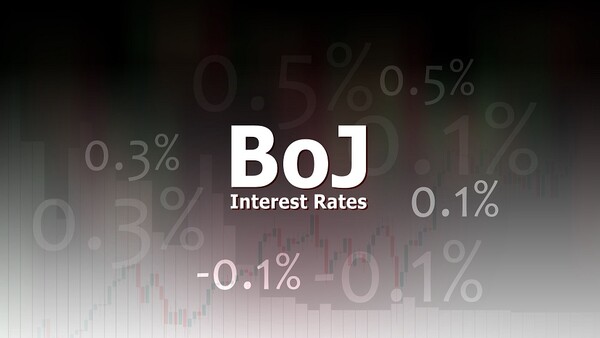
[Digital Today reporter Yoonseo Lee] The Bank of Japan (BOJ) raised its policy rate to about 1 percent, the highest level in about 30 years, but bitcoin and the cryptocurrency market continued a relatively steady trend without a major shock.
On June 16, local time, blockchain outlet Decrypto reported that the BOJ set new policy rate guidance in a 7-1 vote of its policy board, with the hike taking effect from June 17.
Japan rate hikes are typically seen as a headwind for risk assets including cryptocurrencies. If the yen carry trade shrinks, global liquidity could fall. Investors borrow low-yielding yen and invest in higher-return assets overseas. This time, an assessment emerged that the shock was limited because the market had already priced in much of the move and leveraged positions had already declined.
Bitcoin traded around $66,000, and the total cryptocurrency market capitalisation fell 1.4 percent to about $2.34 trillion, but it did not lead to a sharp sell-off. Bitcoin futures open interest also fell from the previous day, which is interpreted as leaving limited scope for a chain reaction of forced liquidations from excessive leverage.
Before the rate hike, a ceasefire agreement between the United States and Iran acted as a factor lifting the cryptocurrency market. After U.S. President Donald Trump announced an agreement with Iran over the weekend, tensions in the Middle East eased and bitcoin rose from the low $60,000s to above $65,000. The signing is scheduled for June 20.
Market participants see the Japan-driven shock as weaker than before. Ryan Yoon (라이언 윤), chief analyst at Tiger Research, said the yen carry trade this time failed to create meaningful disruption in cryptocurrencies or global equities. He said memories of past carry-trade shocks remain strong, but investors were not swept up in fear because the market appears to have fully recovered from the earlier shock.
Maxim Balashevich (맥심 발라셰비치), founder and chief executive officer of Santiment, also cited pricing-in as a reason the market impact from Japan's rate hike was limited. He said the move has become less important than before because the market has already reflected it in prices. He added that factors that could move the market sharply would be future events that are not yet fully priced in.
The BOJ also said it would expand purchases of government bonds if long-term rates surge sharply. It signals it does not intend to raise the intensity of tightening all at once. It also reaffirmed plans to cut bond purchases by 200 billion yen per quarter until early 2027, then maintain them at around 2 trillion yen.
It said Japan's economy continues to show a moderate recovery. It judged that while some Middle East-related uncertainty remains, improving corporate profits and a strong jobs market are absorbing the burden on the economy. The BOJ also saw the government's measures to ease energy costs as reducing the risk of a sharp economic slowdown.
Ultimately, the rate hike was closer to an event to check whether concerns about shrinking liquidity would lead to an actual price decline, rather than triggering an immediate selling shock in the cryptocurrency market. The market is focusing less on the change in Japan's monetary policy itself and more on whether the step will actually reduce U.S. market liquidity going forward.
 Yoonseo Lee
yslee@d-today.co.kr
Yoonseo Lee
yslee@d-today.co.kr