
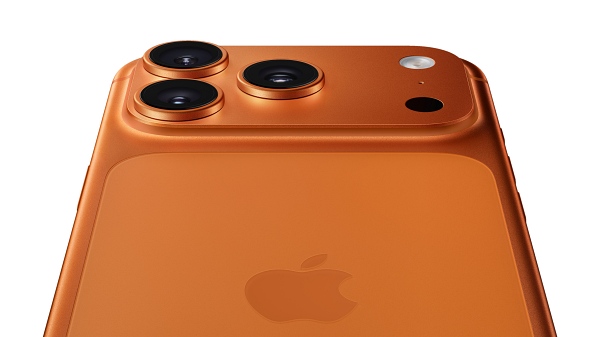
A forecast that Apple will introduce a 200-megapixel camera in an iPhone due to be released in 2028 is raising the possibility that iPhone camera performance could face another major turning point. As smartphone camera competition becomes more advanced, analysts say Apple is signalling a change to its long-standing pixel strategy, drawing industry attention.
On Jan. 6, IT outlet 9to5Mac reported that global investment bank Morgan Stanley said in a recently released investor note that Apple will adopt a 200-megapixel camera for the first time in its 2028 iPhone lineup. It is seen as the first official analysis to present a timeline for actual adoption after Weibo tipster Digital Chat Station mentioned the possibility last year that Apple was developing a 200-megapixel camera.
The iPhone currently applies 48-megapixel sensors to all rear cameras, including the main camera, ultra-wide and telephoto. The main camera, in particular, switched first from 12 megapixels to 48 megapixels, driving improvements in image quality. After that, the prevailing view is that Apple has focused less on competing on pixel counts and more on image processing technology, how sensors are used and software optimisation. Morgan Stanley expects this trend to continue through 2027 and said Apple is more likely to focus on raising overall camera completeness than expanding pixel counts in the short term.
Against this backdrop, Morgan Stanley forecast that starting in 2028 Apple will attempt a full-scale change in pixel counts. It said adopting a 200-megapixel camera could be more than a simple specification upgrade and could symbolise a shift in the direction of iPhone camera strategy. That has raised the possibility that the 2028 iPhone could be a major upgrade model centred on camera performance.
The forecast is also drawing attention to the parts supply chain. Morgan Stanley expects Samsung Electronics to supply the 200-megapixel camera sensor. Samsung Electronics competes with Apple in the smartphone market, but has maintained a long cooperative relationship in key components such as displays. Samsung has also been mentioned as a supplier of a crease-free display for a future iPhone Fold.
The industry is interpreting the forecast as having meaning beyond a simple sensor upgrade. With rivals already commercialising 200-megapixel sensors, Apple’s change is seen as a choice that reflects an intent to narrow any technology gap while delivering a high-resolution shooting experience optimised for its ecosystem.
As Apple has sought differentiation through computational photography and efficient sensor use rather than pixel races, analysts say adopting 200 megapixels could be a strategy to lay a technical foundation for cropped shooting, high-magnification digital zoom and expanded headroom for image processing based on a high-resolution sensor. While there is still time until any actual adoption, attention remains on whether Apple’s medium- to long-term camera strategy will show changes starting with the 2028 iPhone.
 Kyungmin Hong
hongm@d-today.co.kr
Kyungmin Hong
hongm@d-today.co.kr