
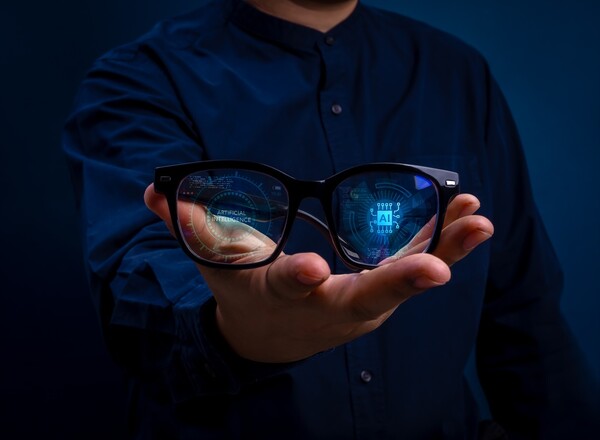
With AI-enabled smart glasses entering the domestic market in earnest, calls are growing to strengthen management standards. A series of cheating attempts using smart glasses has been detected recently, prompting criticism that the devices have become a management target that can no longer be ignored.
Cheating with smart glasses has become a reality, highlighting gaps in exam hall supervision.
The Korea TOEIC Committee detected attempts to cheat using smart glasses during regular TOEIC tests held on May 10 and May 31. Test-takers were caught by proctors after trying to take the test while wearing the devices in the exam hall.
Smart glasses support functions such as photo and video recording as well as AI-based information searches and translation. They look little different from ordinary glasses. This creates a high risk they could be misused in exam halls for photographing questions or searching for information. In the regular computer-based technician tests run by the Human Resources Development Service of Korea, 3 candidates were caught wearing smart glasses, as side effects continue to emerge alongside the devices' spread.
The College Scholastic Ability Test is no exception. Electronic devices such as smartphones and smartwatches are not allowed into the exam hall for the test. Smart glasses are also electronic devices, meaning they fall under the ban. But because they are not easily distinguishable from regular glasses by appearance, proctors still face the burden of checking one by one whether people are wearing them.
Concerns are rising in the education field. "In tests such as midterms or finals at regular universities, it would be really difficult to catch," an education official said. "If they are distributed to ordinary elementary, middle and high school students as well, procedures beyond simple belongings checks will be needed," the official added.
Under the current Elementary and Secondary Education Act, students are banned from using smart devices such as mobile phones during class. Exceptions are allowed only in cases such as students with disabilities or those who need special education using them as assistive devices. The types of smart devices restricted can be set by school rules. But devices in the form of glasses, such as smart glasses, are not easy to judge on site. In particular, for products fitted with prescription lenses, students may claim they need to wear them for vision correction, raising expectations of confusion in the field.
Concerns over illegal filming also persist. Meta smart glasses, seen as a representative model in the market, are designed so a front light-emitting diode (LED) automatically turns on when the camera operates. But online malls such as Coupang and AliExpress openly sell stickers or cover-type accessories that block the LED. With hidden-camera crimes frequently targeting classmates or teachers, criticism is growing that separate management standards are needed.
The telecommunications and device industries see a new opportunity, but standards need to be updated in parallel.
Still, smart glasses themselves cannot be seen only as something to ban or block. Their spread is viewed as a new opportunity for the telecommunications and device industries. Using voice to call AI and use recording or translation without taking out a smartphone is cited as a representative example of next-generation wearable services. As users generate and transmit more data, expectations are also high that this will lead to expanded use of communications networks and demand for new value-added services.
Rapid market growth is also expected. After Meta officially launched 5 types of second-generation smart glasses in South Korea on May 25, Samsung Electronics plans to unveil smart glasses developed in collaboration with Google in the second half of this year. With the Samsung-Google camp joining Meta, the industry consensus is that the domestic smart glasses market will expand faster.
The problem is that on-site standards are being set too slowly compared with the pace of product adoption. Meta display-type models that show information directly on the lens are already under development. If such display-type models are commercialised, it could become even harder to respond to cheating.
The industry says standards should be tailored to risk by location, rather than imposing across-the-board restrictions on the products themselves. In everyday spaces, management should focus on user notifications and recording indicator functions, while rules for bringing in and using the devices should be clarified further in sensitive spaces such as exam halls, schools and security facilities.
"With smart glasses, the issue is the place where they are used rather than the technology itself," an industry official said. "Management standards centred on existing smartphones and watches need to be refined in more detail," the official added.
 Jin-ho Lee
jhlee26@d-today.co.kr
Jin-ho Lee
jhlee26@d-today.co.kr