
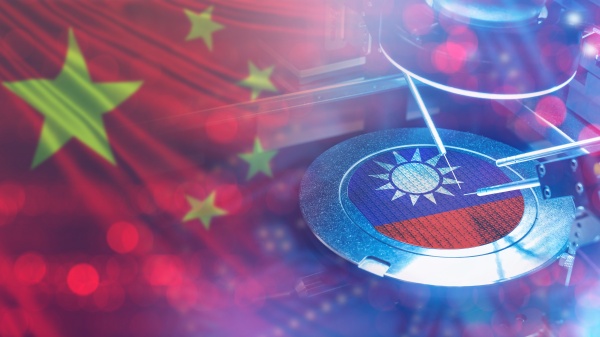
Taiwan is reviewing a plan to broaden restrictions on exports of artificial intelligence (AI) chips to all customers in China.
On June 10, online media outlet Gigazine reported the review could include controls on sales to China as a whole, not only to firms already on a blacklist such as Huawei and SMIC, and could also include criminal penalties for smuggling AI servers.
A key question is how closely Taiwan will align with U.S. export-control standards for China. Taiwan currently does not define unlicensed exports of AI chips to China as a crime. That allows authorities to warn sellers they may be violating U.S. rules, but investigators and prosecutors have relied on existing laws such as document forgery.
That gap has drawn attention alongside recent allegations of indirect exports of AI servers equipped with Nvidia chips. In May 2026, 3 people were arrested over suspected smuggling involving about 50 servers fitted with Nvidia products, but the charge applied was document forgery, not an export-control violation. If new rules are introduced, Taiwan could establish a system to directly police not only chips but also the movement of finished AI servers.
Taiwan added Huawei and SMIC to its blacklist in June 2025, requiring local companies to obtain government approval to do business with the two firms. But the curbs were limited to specific companies, leaving room for AI chips or servers to flow to other customers in China. If Taiwan, like the United States, sets control targets based on processing performance above a certain level, it would also clarify what grades of AI servers cannot be shipped to mainland China.
Taiwan's economy ministry said it will strengthen oversight of "strategic high-tech products" and improve consistency with international export controls. It also said it is continuing consultations with the United States on whether to include advanced chips in the control list. The final plan is expected to be set after confirmation between senior officials in Taiwan and the United States.
The issue is drawing attention because Taiwan is a key hub in the AI server supply chain. Foxconn is cited as accounting for about 40 percent of the global AI server market, and Quanta Computer, Wistron, Wiwynn and Inventec also supply rack-level AI servers equipped with Nvidia and AMD accelerators to data centres worldwide. Even if TSMC's production of advanced chips for China is already restricted, there is concern that servers assembled in Taiwan could later enter China, creating a loophole in controls.
Within Taiwan, some are also raising the burden of tighter controls. Semiconductors underpin both Taiwan's economy and security. Foreign Minister Lin Chia-lung (林佳龍) has previously said he does not want to "weaponise" semiconductors. There is a cautious view that excessive controls on China could also weigh on domestic industry.
Pressure is also growing from U.S. politicians. Senators Jim Banks and Andy Kim have called for blocking an indirect route in which foundries such as TSMC produce advanced AI chips through overseas subsidiaries of Chinese companies. The U.S. Commerce Department's Bureau of Industry and Security has made clear that sales to third-country subsidiaries of Chinese companies, such as in Malaysia, require licences, but experts say it is unclear whether routes in which Chinese front companies place orders for customised chips have been sufficiently blocked.
The debate over exports to China has also spread to Nvidia. Senator Elizabeth Warren has asked Nvidia Chief Executive Jensen Huang (젠슨 황) to testify before the Senate Banking Committee on China sales and compliance with export controls. Huang proposed inviting Warren and committee staff to Nvidia headquarters instead of public testimony to explain the company's technology and the U.S. AI ecosystem. He has argued that limiting sales to China would do little to slow China's AI development and could only weaken the competitiveness of U.S. companies.
China is responding by moving to reduce its reliance on U.S.-made AI chips. China is reported to be reviewing plans to invest about $295 billion over the next 5 years to build a nationwide AI data-centre network. The plan, led by the National Development and Reform Commission, aims to link dispersed computing facilities by 2028 and source at least 80 percent of core technology from domestic suppliers such as Huawei.
If Taiwan introduces AI chip rules targeting all customers in China, the separation of semiconductor and AI infrastructure supply chains could become more pronounced. Taiwan's final choice is expected to affect not only routes for advanced chips and AI servers destined for China but also the structure of AI infrastructure being reshaped around the United States and China.
 Jinju Hong
hongjj@d-today.co.kr
Jinju Hong
hongjj@d-today.co.kr