
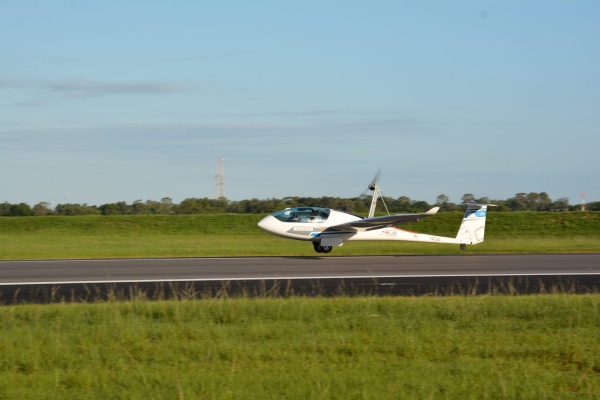
An electric aircraft equipped with solid-state batteries has succeeded in a crewed test flight. It is seen as a case confirming the potential for commercial use of solid-state batteries in aviation as well as electric vehicles.
On June 10, electric vehicle outlet CleanTechnica reported that electric aircraft development group Helios Horizon recently completed a crewed test flight of an electric aircraft equipped with solid-state batteries. The flight was conducted with an actual pilot on board, not as an unmanned experiment.
The test flight was conducted on June 6. One chief test pilot was aboard, and the goal was not long-range operation but checking weight distribution and handling characteristics with the newly installed solid-state battery.
The experimental aircraft is about 25 feet long with a 61-foot wingspan, and has a maximum takeoff weight of 1,300 pounds, or about 600 kg. The flight took place at low altitude below about 500 feet above the ground, with a top speed of about 60 miles per hour.
Helios Horizon said it carried out ground tests at maximum output until the battery was fully discharged before the flight, and repeatedly conducted load tests of the electric system.
The company said the flight was an important milestone for a planned stratospheric flight test. Miguel Iturmendi (미겔 이투르멘디) of Helios Horizon said the main goal was to confirm the aircraft's behavior and handling after installing the new battery.
The battery pack used in the test was made by the company itself. It used commercially available solid-state battery cells purchased through multiple suppliers. The company said it was verifying the technology from the standpoint of an end user, not a battery manufacturer.
Battery prices remain high. One battery pack set costs about $30,000, making it 3 to 4 times more expensive than existing lithium polymer batteries. The company said it expects prices to fall sharply if production scales up and technology advances continue.
Solid-state batteries are drawing attention because of their high energy density. The cells used in the test had an energy density of 410 watt-hours per kilogram, far above the 260 watt-hours per kilogram of the non-solid-state cells used previously.
The aircraft can be fitted with 2 or 4 batteries, and each battery weighs about 80 pounds, or about 36 kg. Total battery weight is about 160 to 320 pounds, or about 72 to 145 kg. Each battery has a capacity of 14.8 kilowatt-hours.
The company cited fast charging and safety in addition to high energy density as advantages of solid-state batteries. Even at the current level of technology, it said energy density is 60 to 80 percent higher than existing lithium-ion batteries and could improve by about 40 percent more within the next 2 years. It also said the battery can be charged to about 80 percent within 15 minutes even when it is almost discharged.
Safety is also seen as a key strength. Solid-state batteries have a lower fire risk than existing lithium-ion batteries in high-temperature environments or under external impact, drawing particular attention in aviation.
Challenges remain before commercial use. Helios Horizon said it expects commercial certification of solid-state batteries for electric aircraft could be possible within 2 to 3 years, but the actual schedule depends on approval procedures by battery manufacturers and regulators.
The industry sees the test flight as significant for validating the feasibility of solid-state battery electric aircraft rather than setting records for distance or altitude. If performance and stability are proven through additional flight tests, solid-state batteries are also expected to be more likely to become a core technology in the next-generation electric aircraft market.
 Jinju Hong
hongjj@d-today.co.kr
Jinju Hong
hongjj@d-today.co.kr