
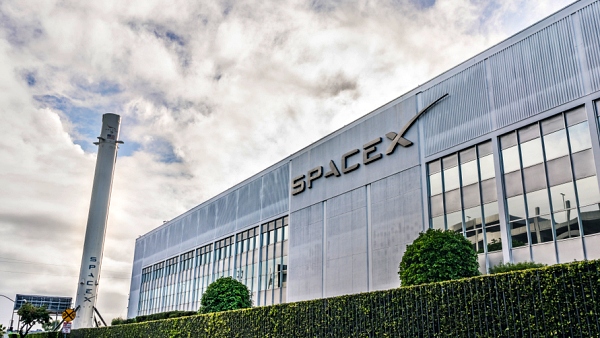
The biggest risk ahead of SpaceX's initial public offering (IPO) may be investors seeking short-term gains rather than insufficient demand, a view has been raised.
Jim Cramer (짐 크레이머), host of CNBC's Mad Money, said on Tuesday that who gets the shares matters more than whether SpaceX's listing itself becomes a hit.
Cramer pointed to the makeup of buyers as more important, even as he viewed as positive that the offering is already oversubscribed. Demand for SpaceX shares is reported to be about four times the amount available for allocation. Such figures are typically seen as a sign of strong investor demand, but Cramer said the outcome could differ if a lot of money comes in planning to sell immediately after listing.
He identified short-term trading forces as the biggest burden. "Speculators are not coming in to hold for the long term," Cramer said. "They may not even hold until the afternoon." He added, "I worry about that group."
If such investors receive allocation and start selling as soon as trading begins, share price volatility could rise. If supply and demand wavers early in the listing, the share price could come under pressure even with a strong subscription ratio. "These people can harm investors," Cramer said. "They just want to take profits as quickly as possible."
By contrast, he pointed to long-term oriented retail investors and institutions that participated early as a relatively healthy IPO structure. He said the post-listing trend is more favorable when retail investors do not easily put shares up for sale and institutions join under a promise not to sell. "What you want is a deal with retail investors who do not touch the stock, and large institutions that came in very early and promised not to sell," Cramer said.
He also cited tight allocation of offering shares as a factor that can reduce the influence of short-term profit seekers. The more investors receive less than they want, the clearer the signal that demand exceeds supply, and that could lead to additional buying demand after listing, he said. "If you applied for 100 shares and only got 25, that's a good situation," he said. "It makes you want to buy more."
Cramer said it was still hard to be fully reassured by the current four-times oversubscription alone. While excess demand could limit the impact of short-term trading money, he said the stronger the demand, the greater the share price's ability to hold up after listing. "If this deal is four-times oversubscribed, that should not happen," he said, adding, "I would have been much more comfortable if SpaceX was 10-times oversubscribed."
The remarks show that, with market expectations high around the SpaceX IPO, it is difficult to explain later share price moves based only on listing hype indicators. Even if the subscription ratio is high, what may determine supply and demand immediately after listing could be the share of investors who will actually hold the stock for a long time. As a result, market attention is expected to shift from subscription figures to how limited early selling pressure will be after listing.
 Jinju Hong
hongjj@d-today.co.kr
Jinju Hong
hongjj@d-today.co.kr