
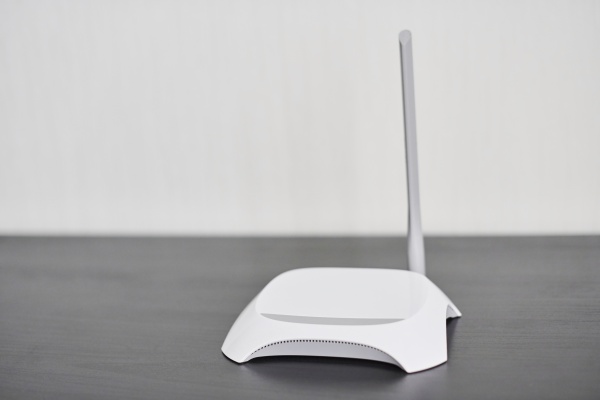
About one-third of Wi-Fi networks worldwide are still stuck on the Wi-Fi 4 (Wi-Fi 4) standard that emerged 15 years ago, a survey showed.
TechRadar reported on June 9 that internet speed test firm Ookla said in a recent survey that 33.2 percent of Wi-Fi networks worldwide still use Wi-Fi 4-based equipment.
The problem is that even as broadband internet speeds rise, indoor wireless environments do not keep pace. Smartphones and laptops are replaced steadily, but home router replacement cycles are much longer. That leaves the latest devices held back by older equipment. Ookla defined Wi-Fi as the "core means in the last mile" that carries most indoor internet traffic. That means even if broadband lines improve, outdated routers can create a real-world performance bottleneck.
Traffic distribution shows the spread of the latest standards remains slow. Wi-Fi 5 had the largest share at 38.3 percent, while Wi-Fi 6 was 26.7 percent. Wi-Fi 7, the latest standard certified by the Wi-Fi Alliance in 2024, stood at 1.8 percent. Wi-Fi 4, introduced in 2009, still maintained a large share.
Limits of older equipment are clearer in frequency bands than in speed figures. Wi-Fi 4 and Wi-Fi 5 devices cannot access the 6 GHz band. In effect, they cannot use the key band used by Wi-Fi 6E and Wi-Fi 7. Even if a new smartphone supports 6 GHz, it cannot use that band if it connects to an old router.
These limits are more pronounced in densely populated areas. Existing Wi-Fi 4 equipment mainly uses the 2.4 GHz band. That range is crowded with Bluetooth devices, wireless peripherals and various IoT products, and tends to suffer heavy signal interference.
About 60 percent of global wireless traffic is currently handled in the 5 GHz band, but in dense areas of apartment complexes and multi-family housing, congestion frequently occurs as routers from multiple households use the same channels.
The network environment itself has also changed sharply from the past. Homes today connect not only smartphones and laptops but also smart TVs, game consoles, security cameras, smart home devices and remote work equipment at the same time. Experts explain that this environment has become far more complex than when Wi-Fi 4 was designed.
As a result, users may experience slower speeds, higher latency and unstable connections. As use of video conferencing, cloud gaming and 4K streaming services increases, older routers are cited as a major factor lowering network quality.
Performance gaps between devices are also large. Wi-Fi 7 routers can use 320 MHz channels in the 6 GHz band to support a theoretical maximum of 46 Gbps. By contrast, widely used Wi-Fi 4 routers top out at about 600 Mbps even under optimal conditions. TechRadar said that level of performance is barely enough to keep up with modern 4K streaming demand.
As internet service providers expand multi-gigabit broadband offerings, these bottlenecks may become more noticeable.
Market research firm Omdia forecast that the installed base of consumer Wi-Fi 7 will grow 35.2 percent a year to reach 13.8 percent in 2030. Still, with the current penetration at just 1.8 percent, shifting to the latest wireless networks is likely to take considerable time.
Ultimately, the weak point of indoor networks may be the router, not the internet line. Even with the latest smartphone and gigabit-class internet, if a home's wireless infrastructure is outdated, users will be unable to fully enjoy the performance indoors despite already paying for it.
 Jinju Hong
hongjj@d-today.co.kr
Jinju Hong
hongjj@d-today.co.kr