
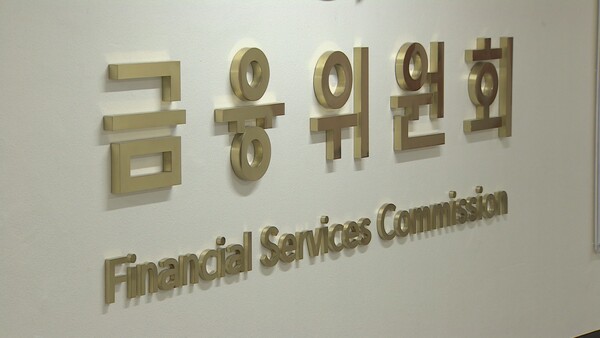
Financial authorities are moving to fix the practice of financial companies repeatedly extending the statute of limitations on overdue loans and trying to collect even after receiving tax benefits. Going forward, for a financial company to have a personal overdue loan recognised as a loss, it must let the statute of limitations run its course when it first comes due.
The Financial Services Commission and the Financial Supervisory Service said on Tuesday they would issue an advance notice of amendments to the detailed rules for recognising bad debts on financial institution claims.
The amendment is a follow-up to the FSC's measures announced in February to strengthen management of personal overdue debt. It was prepared to improve the practice of indiscriminately extending statutes of limitations and to encourage the cleanup of personal overdue loans.
Under current tax law, ordinary companies must have a loss determined as uncollectible, such as by completion of the statute of limitations, to have receivables or bills and cheques recognised as losses. Financial companies, by contrast, could receive tax benefits even before the statute of limitations was completed if they classified overdue loans as estimated losses and applied to the FSS for bad-debt recognition and received approval.
As a result, authorities judged that financial companies have continued the practice of repeatedly extending the statute of limitations and trying to collect for long periods even on written-off claims already recognised as losses under tax law.
Once the amendment takes effect, financial companies will be able to receive bad-debt recognition on written-off personal unsecured overdue loans on the condition that the statute of limitations is completed when it first comes due. The statute of limitations for personal overdue loans typically comes due 5 years after delinquency.
The scope will be applied in phases in consideration of the burden of soundness management in the financial sector. It will first apply to overdue claims of 50 million won or less for banks and insurers, and 30 million won or less for savings banks, mutual finance and specialised credit finance companies. Authorities plan to gradually expand the scope while reviewing how the system operates.
Exceptions will allow extensions of the statute of limitations even after bad-debt recognition when hidden assets are discovered or when the statute is unavoidably suspended under the law due to bankruptcy or rehabilitation procedures, and when debt restructuring is being implemented through the Credit Recovery Committee or through in-house programmes.
Management of debt sales will also be strengthened. If a financial company sells debt that received tax benefits on the condition of completing the statute, it must specify in the sale contract the expected date of completion and the obligation to complete it. Checks and reporting on whether the buyer fulfils its obligations will also be made mandatory.
Authorities plan to complete the amendment to the detailed rules in July and implement it from September after going through the revision process.
They will also set up a reporting and disclosure system on each financial company's debt restructuring performance, key details of debt sales and performance in completing statutes of limitations. Related results will be disclosed starting with figures for the first half of 2026.
Authorities will also pursue institutional changes to reduce disadvantages to debtors from repeated debt sales. They plan to revise guidelines on debt collection and the sale of loan claims in July to impose obligations to check whether buyers engage in illegal collection and whether they fulfil obligations to complete statutes of limitations, and to report to supervisory authorities.
An amendment to the supervisory rules under the Personal Debtor Protection Act, which restricts the sale of claims under rapid debt restructuring being implemented through the Credit Recovery Committee, is also expected to take effect in July.
To establish a principle of completing statutes of limitations and an exceptional principle of extensions, authorities will also revise sector-by-sector best-practice rules for managing statutes of limitations in August. They will also introduce a new procedure to re-examine extensions after 3 years.
 Ji-young Lee (이지영)
ljy@d-today.co.kr
Ji-young Lee (이지영)
ljy@d-today.co.kr