
SpaceX's satellite internet service Starlink has begun charging residential service subscribers a $10 monthly equipment rental fee. It has overhauled its sign-up system by removing upfront hardware purchase costs and folding the hardware expense into monthly charges.
IT outlet Ars Technica reported on Monday that Starlink is rolling out a new subscription policy in some countries that applies a $10 monthly equipment rental fee instead of the existing one-time hardware sales model.
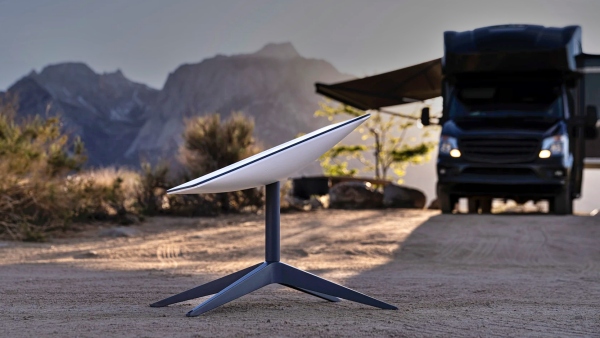
Starlink's residential service order page now shows a $0 prepayment cost for the Starlink kit, which consists of a satellite receiver antenna and a Wi-Fi router. Subscribers must instead pay a $10 monthly equipment fee in addition to the internet service charge.
Internet service fees have also been raised recently. Starlink increased existing plan prices by about $5 to $10 a month. Under the changes, the 100 Mbps plan is $55 a month, the 200 Mbps plan is $85 a month and the Max plan, which offers speeds of up to 400 Mbps, is $130 a month. Professional installation is offered for a one-time $199 fee, and Max subscribers can receive the installation service at no additional cost.
The equipment rental policy is not being applied uniformly worldwide. Starlink support documents explain that hardware rentals have begun in some countries, and the same approach has been confirmed in the United States, Canada, Britain, France, Australia and Mexico.
The rental model also comes with some restrictions. Subscribers who rent equipment cannot pause service, and existing renters who want to buy the equipment must go through a separate conversion process via customer support channels.
By contrast, users who already own Starlink equipment can avoid paying the $10 monthly rental fee by registering the device identification number during the new sign-up process.
Starlink has adjusted its equipment pricing policy several times. Early in the service in 2020, it sold the Starlink kit for $499, and in 2022 raised the price to $599. In 2024, it applied differentiated pricing of $499 or $299 depending on regional network congestion. Last year, it also ran a promotion in some countries and in certain U.S. regions that provided equipment for free with a 12-month commitment.
At the time, the plan that included free equipment was $120 a month, while using the same service by purchasing equipment cost about $90 a month.
Some analysis says the rental model is not necessarily an advantageous choice for long-term users. Paying the $10 monthly rental fee for 3 years would bring the total cost to $360.
Some retailers sell a standard Starlink dish for $349, and it has been reported that the price has fallen to as low as $199 or $89 during discount events.
The industry sees the policy change as tied to Starlink's strategy to strengthen profitability. Starlink's division accounted for $3.26 billion of SpaceX's total revenue of $4.69 billion in the first quarter this year, establishing itself as a key source of earnings.
The market expects Starlink to continue adjusting equipment prices, service fees and discount policies depending on regional demand and network conditions. While the initial burden for new subscribers has fallen, total costs could rise with long-term use, and how users' actual cost burden changes is expected to be a point to watch.
 Jinju Hong (홍진주)
hongjj@d-today.co.kr
Jinju Hong (홍진주)
hongjj@d-today.co.kr