
[DigitalToday reporter Yoonseo Lee (이윤서)] Google has launched a full update to NotebookLM, its AI note-taking and research tool.
On June 8 (local time), IT media outlet The Verge reported that NotebookLM applies Google’s latest Gemini 3.5 model to improve response accuracy and reliability.
The update’s key change is how NotebookLM gets started. Users previously had to load materials first, such as notes or YouTube videos, but can now begin research by asking a question on a specific topic. Google said applying Gemini 3.5 enables NotebookLM to provide more accurate and reliable information.
The way it explores sources has also changed. NotebookLM finds related materials based on Google Search and expands its existing Discover function to suggest web resources worth referencing. This is designed to create a starting point for research even if users do not first organise and input materials. As a result, NotebookLM is expanding its role beyond a note-organising tool into a research tool that combines source discovery with Q&A.
Another pillar of the expansion is its runtime environment. NotebookLM now runs on Google’s agent-based coding platform Antigravity. Each notebook is connected to a secure cloud computer, allowing users to write and run code directly to support research. This adds a structure that processes part of the analysis in practice, not just generating answers.
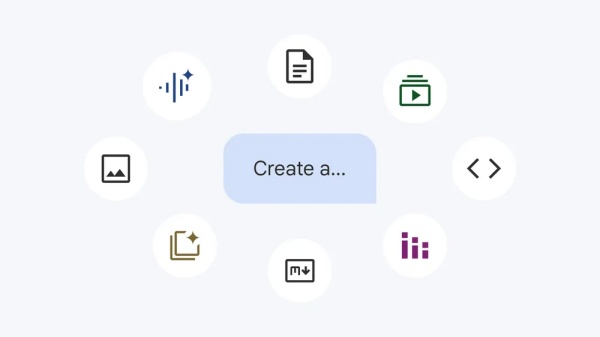
Supported formats have also expanded. NotebookLM can export outputs to PDF documents and data visualisation images (PNG, SVG), as well as images generated by Nano Banana in PNG, JPG and GIF formats, Excel files, PowerPoint files and CSV sheets.
NotebookLM, launched in 2023, has established itself as a tool that uses AI to ask questions and organise content based on notes and original materials. This overhaul broadens its scope by shifting the usage flow from upload-centred to question-centred, and adding search, code execution and file export.
The change shows competition in AI research tools is moving from simple summarisation to actually carrying out tasks. NotebookLM now supports a flow that goes beyond organising user-provided materials to finding needed sources, running code for analysis and exporting outputs as documents, tables and images.
In particular, enabling research to start with questions alone is assessed as a change that lowers the entry barrier for general users. Previously, users had to collect and organise materials first, but after the overhaul NotebookLM takes on a broader scope from setting the research topic to searching sources and structuring answers.
The update does not apply immediately to all users. It currently targets subscribers to Google’s AI Ultra plan and Workspace customers, and the company said it plans to expand the service to more plans. In this context, the overhaul shows Google is bundling its AI productivity tools in a direction that connects search, code execution and document export.
 Yoonseo Lee
yslee@d-today.co.kr
Yoonseo Lee
yslee@d-today.co.kr