
[Digital Today reporter Jinju Hong (홍진주)] Apple unveiled next-generation operating systems iOS 27 and iPadOS 27 and signaled an update focused on performance improvements. Everyday speeds such as app launching, file transfers and AirDrop are set to rise sharply, while some older iPads and Apple Watches were excluded from support.
On June 9 (local time), online outlets Gigazine and Engadget reported that Apple unveiled iOS 27 and iPadOS 27 at its Worldwide Developers Conference (WWDC 2026) and announced the list of supported devices and key features.
The biggest change is a noticeable performance boost. Apple said the launch speed of its own apps and third-party apps on iPhones and iPads will be up to 30 percent faster. Transfer speeds for photos and files via AirDrop will improve by up to 80 percent, and uploading content to the device library will also be faster.
iPad productivity features are also strengthened. Apple explained that file transfer speeds with external storage devices will improve by up to five times. This is expected to bring the file management experience using external drives closer to the level of the Mac's Finder.
Network connectivity is also improved. Devices will switch more efficiently between Wi-Fi and cellular networks, and users are expected to change settings less often. Apple said this optimisation will apply not only to the latest devices but also to relatively older models such as the iPhone 11.
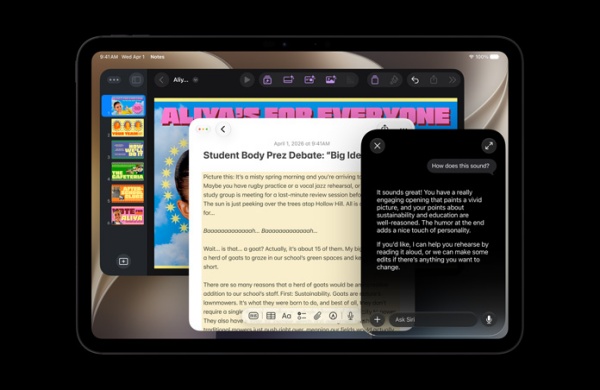
Along with performance improvements, artificial intelligence (AI) features will also expand. iPadOS 27 adds app integration features using Siri AI and Apple Intelligence, and includes child protection features and stability improvements across the operating system.
Still, device support criteria have become stricter with the introduction of new features. Apple excluded the eighth-generation iPad and the fifth-generation iPad mini from the iPadOS 27 support list. Standard iPads will support only the iPad A16 and ninth-generation and later models, while the iPad mini will be limited to sixth-generation and later products.
Support ranges were also adjusted for the iPad Air and iPad Pro. The iPad Pro will support the 12.9-inch fourth-generation and later models and the 11-inch second-generation and later models. The iPad Air lineup was reshaped around models equipped with M2 or higher chips, excluding some M1-based products from support.
Apple Watch support also shrank. watchOS 27 will support Apple Watch Series 10 and later models, Apple Watch Ultra 2 and Apple Watch SE3. As a result, Apple Watch Series 6 to 9, the first-generation Ultra and Apple Watch SE2 will be excluded from major operating system updates. Series 9, in particular, will see major operating system update support end just three years after its release.
In contrast, iPhone support was relatively maintained. iOS 27 will continue to support iPhone 11 and later models, keeping the same support policy as iOS 26.
In the industry, the update is seen as a strategy to strengthen performance optimisation by reducing support for older chipsets while pushing to expand AI features and advance the operating system. How much of the speed improvements Apple presented will be realised in real-world use, and how much it will spur replacement demand among users of devices that have lost support, are expected to be key points to watch.
 Jinju Hong
hongjj@d-today.co.kr
Jinju Hong
hongjj@d-today.co.kr