
The government has set up an international joint research hub for quantum technology at POSTECH.
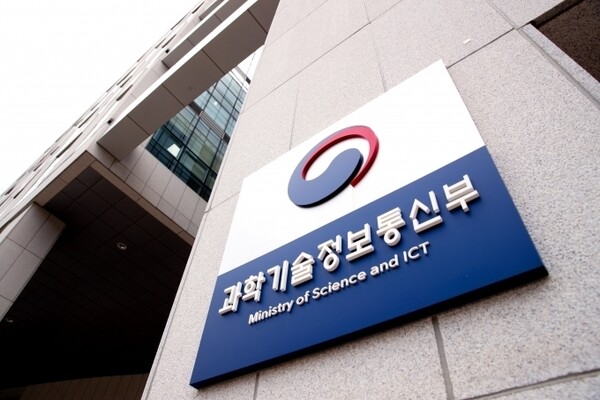
The Ministry of Science and ICT on June 9 held an opening ceremony for the "POSTECH Quantum Global Partnership Lead Center" at Pohang University of Science and Technology. Attendees included officials from North Gyeongsang Province and the city of Pohang, and domestic and overseas researchers including Gil-ho Lee (이길호), a POSTECH professor, Philip Kim (필립 김), a Harvard University professor, and Lyeong Chuan Kwek (리옹 추안 퀙), a professor at the Singapore Centre for Quantum Technologies.
The event featured a presentation of the center's operating plan, a signing ceremony for a memorandum of understanding on cooperation between POSTECH and Harvard, and an exchange of cooperation letters between POSTECH and the Singapore Centre for Quantum Technologies.
The lead center aims to develop technologies to generate and control large-scale quantum entanglement by linking heterogeneous quantum platforms through cooperation among leading domestic and overseas universities in the quantum field. The project period runs from July 2025 to December 2029, and 22.3 billion won will be投入.
Quantum entanglement is a key element that determines the performance of quantum information technologies such as quantum computing, quantum communications and quantum sensing. Quantum technology is currently being researched across various platforms including photonics, superconductivity, atoms and ions, quantum dots, and solid-state quantum systems. Each platform has strengths and limitations, increasing the need for research that links them in a complementary way.
Centered on POSTECH, the lead center will build an international joint research platform involving domestic researchers from Daegu Gyeongbuk Institute of Science and Technology, Ulsan National Institute of Science and Technology, and Gwangju Institute of Science and Technology, as well as overseas research institutions including Harvard, the Massachusetts Institute of Technology, and the Singapore Centre for Quantum Technologies.
Through this, it plans to lay the groundwork for core research on next-generation quantum technology by combining semiconductor and optical communications-based technologies in which South Korea has strengths with quantum platform research capabilities at leading overseas institutions.
The center will pursue joint research linking various quantum platforms such as superconducting and semiconductor qubits, photonics-based quantum computers, and ultracold gas quantum simulations. In particular, it plans to secure next-generation core quantum component technologies such as multi-qubit entanglement, quantum light sources, quantum error mitigation and error correction, and quantum machine learning by combining the strengths of different physical systems, including low-dimensional quantum materials, phonon resonators, quantum dots, van der Waals atomic-layer materials, and photonic integrated circuits.
The center plans to cultivate talent in quantum information devices, quantum computing, quantum optics and quantum materials by dispatching domestic graduate students and postdoctoral researchers to leading overseas research institutions and through joint research projects, regular international workshops and researcher exchanges.
Yoon Kyung-sook (윤경숙), director general for Basic and Fundamental Research Policy at the Ministry of Science and ICT, said, "The government will continue to support cooperation between the excellent research capabilities of domestic universities and leading overseas institutions to advance the cooperation ecosystem in the field of quantum technology."
 Jin-ho Lee
jhlee26@d-today.co.kr
Jin-ho Lee
jhlee26@d-today.co.kr