
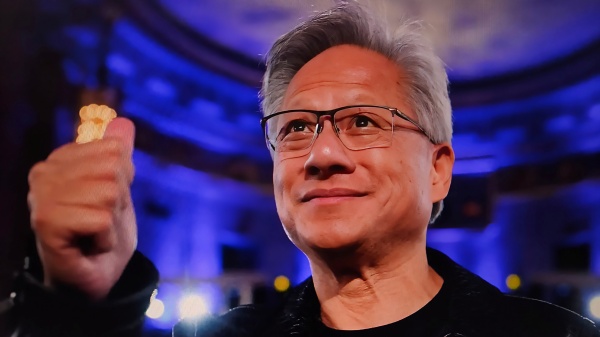
Nvidia CEO Jensen Huang (젠슨 황) has left South Korea after a five-day visit, as an assessment emerges that Nvidia sharply expanded artificial intelligence cooperation with Korean companies on the back of the trip. The company broadened cooperation spanning the memory supply chain, data centres, sovereign AI and robotics, in an effort that is seen as elevating South Korea into a key hub in the global AI ecosystem.
Major foreign media outlets including Cryptopolitan reported on June 8 that Nvidia accelerated efforts to build an AI ecosystem in South Korea by expanding AI infrastructure cooperation with major local companies such as SK Hynix, Naver and SK Telecom during Huang's visit.
The most concrete outcome is next-generation memory cooperation with SK Hynix. The two companies signed a multiyear agreement to jointly develop memory technology to be applied to four next-generation Nvidia computing platforms. SK Group Chairman Chey Tae-won (최태원) is reported to have participated directly in related discussions.
Huang said SK Hynix is Nvidia's largest memory supplier and that cooperation between the two companies will continue over the long term. He added Nvidia is already procuring products worth several billion dollars a year from SK Hynix and that the purchase volume will grow further in the future.
With Naver, the core is cooperation on building AI data centres. Huang met Naver founder and board chair Lee Hae-jin (이해진) and discussed ways to build an AI factory based on Nvidia's DSX platform. Naver is reviewing a plan to expand the power capacity of its data centre, "Gak Sejong", from the current level of 55 MW to gigawatt-scale over the long term, and is pushing to adopt Nvidia technology in the process.
SK Telecom is also moving to build South Korea's first gigawatt-scale AI cloud using Nvidia's DSX platform. The first AI data centre is targeting operations in 2027 and is expected to support the provision of sovereign AI, physical AI and agent-type AI services.
Nvidia's cooperation is expanding beyond AI infrastructure into manufacturing and mobility. LG Group is pushing cooperation in robotics, autonomous driving and building AI factories for manufacturing, while Hyundai Motor Group is discussing the development of physical AI-based mobility systems. Doosan Group was also mentioned as a cooperation partner in robotics, power generation and next-generation semiconductor materials.
Huang stressed during the visit that South Korea can play an important role across the AI industry. He singled out robotics, physical AI and the games industry as key growth areas in the Korean market.
The itinerary also showed strong interest in the Korean market. Huang threw out the first pitch at a Doosan Bears professional baseball game and visited a PC bang in Seoul's Gangnam district to meet users. At the T1 basecamp, he unveiled RTX Spark, a next-generation AI PC platform, and held an event with professional gamer Faker Lee Sang-hyeok (이상혁). Executives from Krafton and NCSoft also attended, and demonstrations of major new games were held.
Huang said the growth potential of the AI industry remains strong despite concerns about recent volatility in the semiconductor sector. He cited ramped-up production of next-generation AI platforms Grace Blackwell and Vera Rubin, and said aligning the supply chain will be an important task in the second half of 2026.
The industry is assessing that Nvidia has elevated South Korea into a key strategic base encompassing the memory supply chain, AI data centres and industrial AI application services as a result of the visit. Attention is focused on what role Korean companies will take in global competition over AI infrastructure.
 Jinju Hong
hongjj@d-today.co.kr
Jinju Hong
hongjj@d-today.co.kr