
[DigitalToday reporter Daegeon Seok (석대건)] Samsung Electronics and SK Hynix have shown sharp volatility in the domestic stock market, but Samsung Electro-Mechanics and LG Innotek have not been heavily shaken. An analysis says component demand is separate even when memory prices rise and fall.
Samsung Electro-Mechanics and LG Innotek held up relatively well even as semiconductor bellwethers came under correction through late last week. While Samsung Electronics fell more than 6 percent and SK Hynix slid close to 10 percent on the 5th, Samsung Electro-Mechanics rose by more than 2 percent and LG Innotek fell only by more than 1 percent. That means the decline in chip heavyweights did not spill over to component stocks. On the 8th, when the domestic stock market plunged, Samsung Electro-Mechanics fell 5.3 percent and LG Innotek dropped 5.6 percent. On the same day, Samsung Electronics fell 10.2 percent and SK Hynix declined 7.7 percent.
According to the industry, concerns about a slowdown in memory demand surfaced after reports that the amount of memory installed in SOCAMM2 for Nvidia’s next-generation Vera CPU would be reduced. Market research firm SemiAnalysis said SOCAMM2 capacity, designed at 192GB per module, was cut to 96GB. It also said an additional version was identified in which the Vera CPU’s LPDDR5 capacity was adjusted to 768GB from 1.5TB.
By the numbers, demand appears to have been cut, but the industry interpretation is the opposite. The explanation is that memory demand has not decreased, and that this is Nvidia’s practical choice to raise system output in an environment of severe supply shortages. With LPDDR supply tightness worsening and demand strong for the standalone Vera CPU and Vera Rubin racks, the analysis says rack output would require lowering memory content per CPU to some extent.
The securities industry is making a similar assessment. Daishin Securities said SO-CAMM content for Vera Rubin has been reduced, but there is no change in the total addressable market for overall DRAM for Nvidia CPUs. It said an unchanged total addressable market despite lower content per unit means more GPUs are shipped than the market expects, and that the reduction is not a spec downgrade but typical noise stemming from supply shortages.
Even if memory wobbles, component demand is separate. A long-term contract trend proves a structural supply shortage.
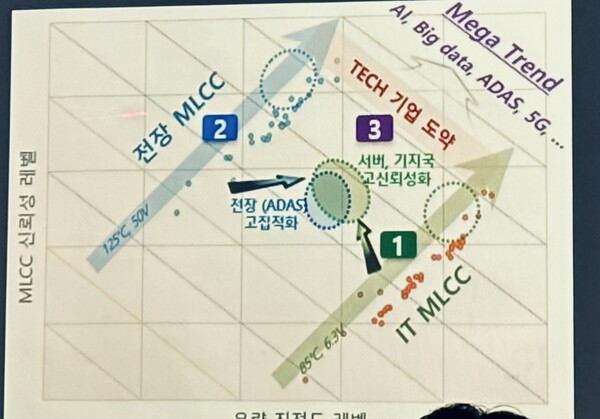
In this situation, decoupling, or the separation of memory and components, stems from the fact that profits at the two component makers are determined by variables other than memory prices. Samsung Electronics and SK Hynix shares are inherently linked to memory prices, so when fixed prices turn down, profit estimates are immediately cut. By contrast, for Samsung Electro-Mechanics and LG Innotek, key products such as multilayer ceramic capacitors (MLCC), flip-chip ball grid array (FC-BGA) substrates and camera modules see profits driven by content and shipments rather than prices.
That means the number of MLCCs and the substrate area in an AI server do not fall because memory prices decline. Instead, the background to the latest specification adjustment includes expanded LPDDR adoption in the server market and intensified supply-demand competition with the smartphone and PC markets. As long as AI infrastructure grows, the volume of components loaded into systems moves independently of the trend in memory unit prices.
The possibility that diversification in memory content will expand in the future also underpins component demand. According to Eugene Investment & Securities, the AMD MI400, which had planned 12-high HBM4, will come in 8-high and 12-high versions. Nvidia’s Rubin Ultra, expected to be 16-high, will also be supplied mainly in 12-high, and during mass production 12-high and 16-high could be offered in parallel. It said that once supply capacity is secured, the trend will be to increase content to maximize performance.
Ultimately, the latest noise again shows that memory is the bottleneck in the AI value chain. According to the industry, memory makers’ demand fulfillment rates for major North American customers remain at 50 to 60 percent, and as a consensus forms that supply shortages could continue until 2030, long-term supply agreements (LTAs) are spreading.
Reflecting this, long-term contracts to secure supply chains are also becoming visible. Nvidia and SK Hynix said on the 8th they signed a long-term technology partnership for joint development of next-generation memory to support the construction of AI factories worldwide, and to accelerate semiconductor design and manufacturing. SK Hynix plans to jointly develop memory for the Vera Rubin AI supercomputer, the Vera CPU, RTX Spark PCs and the Jetson Thor robotics platform in line with Nvidia’s AI infrastructure roadmap.
Nvidia Chief Executive Jensen Huang said, "AI factories are the engine of the next industrial revolution, and advanced memory is essential to deliver their performance," adding, "We will develop next-generation memory together and support the expansion of AI infrastructure worldwide." SK Group Chairman Chey Tae-won said, "This partnership shows the depth of cooperation between the two companies on the foundation built over many years."
 Daegeon Seok
d2dg@d-today.co.kr
Daegeon Seok
d2dg@d-today.co.kr