
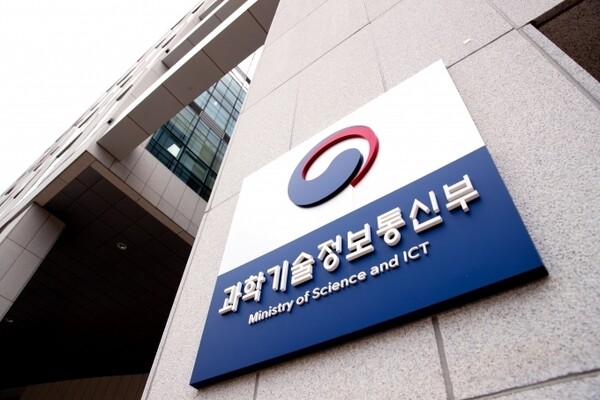
[DigitalToday reporter Jin-ho Lee] The Ministry of Science and ICT will expand support to attract outstanding overseas science and technology talent.
The ministry said on Sunday it made final selections for new projects under the 2026 Overseas Outstanding Scientist Attraction Programme (BP/BP+), part of the "Brain to Korea" initiative, a detailed task under a government policy agenda.
Brain to Korea aims to attract 2,000 global talents by 2030. The latest selection includes 85 BP individual-recruitment projects and 5 BP+ institutional-recruitment projects as eligible for support.
The individual-recruitment track has domestic principal investigators invite outstanding overseas researchers to conduct joint research based on demand in the research field. The institutional-recruitment track is a newly introduced type in which research institutions identify outstanding overseas talent under their own research strategies and support settlement and utilisation.
The individual-recruitment track supports items such as wages and stay expenses for outstanding overseas scientists for up to 3 years. Research funding per project is up to 350 million won a year. The institutional-recruitment track provides support for up to 5 years so institutions can flexibly use funds for recruitment activities, infrastructure development, and wages, stay expenses and research funding. Support per project is up to 3.0 billion won a year.
Through the individual-recruitment programme, 85 outstanding overseas researchers from 20 countries including India, South Korea, the United States and China will enter domestic research sites. By field, more than half were researchers in national strategic technologies such as advanced bio, secondary batteries, hydrogen, semiconductors and displays, and AI and robots. Researchers in basic and foundational areas such as aerospace and physics were also included.
Five institutions were selected for the institutional-recruitment track: Korea University, Sogang University, Sungkyunkwan University, Ewha Womans University and the Korea Advanced Institute of Science and Technology (KAIST). The selected institutions will 추진 projects centred on areas linked to national strategic technologies such as advanced bio, batteries, quantum and AI.
The evaluation comprehensively reviewed factors including institutions' mid- to long-term research strategies, their own investment plans, provision of research infrastructure, dedicated support systems, settlement support measures and post-programme utilisation plans. It particularly focused on whether institutions can strategically identify outstanding talent and ensure stable settlement and utilisation.
Some selected institutions also proposed adding their own funding beyond government support or offering recruited researchers opportunities for appointments as full-time faculty and access to research infrastructure. Some institutions plan to establish end-to-end support systems including visas, housing, family settlement and administrative support so overseas researchers can focus on research after entering the country.
The ministry will use the selections as momentum to pursue both demand-based joint research through the individual-recruitment track and strategic recruitment and settlement support through the institutional-recruitment track. It will also strengthen institutional support so efforts do not end with short-term invitations and researchers can continue to grow within the domestic research ecosystem.
Lee Jun-bae (이준배), director-general for Future Talent Policy at the ministry, said, "With the selection of these new projects, we will strengthen joint research centred on individual researchers and settlement and utilisation support at the institutional level, and support South Korea in making a leap as a global research hub."
 Jin-ho Lee
jhlee26@d-today.co.kr
Jin-ho Lee
jhlee26@d-today.co.kr