
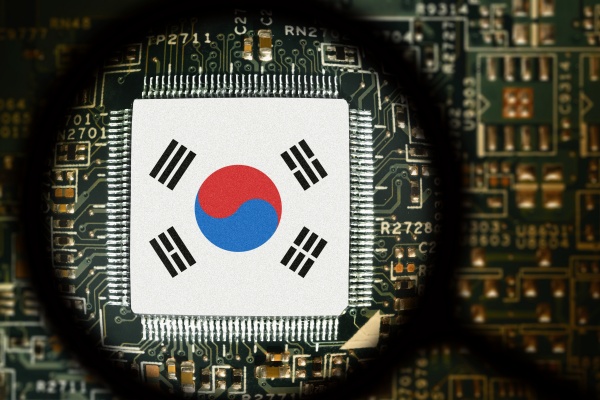
The next phase of gains from artificial intelligence investment could come from emerging markets rather than the United States, a forecast said.
CNBC reported on June 5 that Tim Urbanowicz, chief investment strategist for the Innovators unit at Goldman Sachs Asset Management, said investors should broaden their view beyond their home markets.
Urbanowicz in particular named Taiwan and South Korea as key regions for expanding AI infrastructure. He pointed to the heavy weighting of the two markets in the iShares MSCI Emerging Markets ETF (EEM), which is up 26 percent so far this year as of the June 5 close in U.S. markets.
He said emerging markets are where investors can make "big money" in AI investment, calling it "the next big wave." While enthusiasm for AI investing centered on big U.S. tech stocks continues, he stressed that valuation gains in Taiwan and South Korea have still been relatively smaller than in the United States. Urbanowicz called Taiwan and South Korea "major players" in AI trading and the AI industry, and said the price gap could create additional return opportunities.
Returns for related ETFs have also been steep. The iShares MSCI Taiwan ETF, which focuses on Taiwan, is up about 67 percent so far this year as of the June 5 close in U.S. markets. The iShares MSCI South Korea ETF, which tracks the South Korean market, is up 109 percent on the same basis. Both ETFs include several AI memory-related semiconductor stocks.
He also cited active ETFs as a way to invest in emerging markets benefiting from AI. In a separate memo sent to CNBC, Urbanowicz presented the Goldman Sachs ActiveBeta Emerging Markets Equity ETF as a way to gain exposure to emerging markets' AI beneficiaries. He judged that a broader emerging market portfolio, not only single-country ETFs, can capture upside linked to AI.
He drew a line, saying he had not abandoned optimism about the U.S. market. "The U.S. is still in a position to succeed," Urbanowicz said. The remarks were read as placing weight on the idea that return opportunities could broaden to semiconductor supply chains and the memory value chain outside the United States, rather than AI investing's center of gravity moving completely away from the United States.
In this 흐름, investment focus is expanding from a concentration on big U.S. tech stocks to emerging market semiconductors and related ETFs. Taiwan and South Korea in particular have high weightings of AI memory-related stocks, so if AI infrastructure investment continues to expand, expectations of direct benefits may be reflected. Urbanowicz's separate mention of Taiwan and South Korea also appears to have taken into account their roles in the AI supply chain.
Markets are focusing on whether relatively less-risen emerging markets can be an alternative after U.S. AI beneficiaries have already risen sharply. Urbanowicz said there is still "room for large returns" in markets where valuations have risen less than in the United States. The next point to watch is how far the AI investment theme spreads beyond big U.S. stocks into emerging market ETFs and semiconductor-related assets.
 Jinju Hong
hongjj@d-today.co.kr
Jinju Hong
hongjj@d-today.co.kr