
[San Francisco, United States = DigitalToday reporter Chi-gyu Hwang] The venue of Snowflake Summit 26, Snowflake’s annual global conference held in San Francisco.
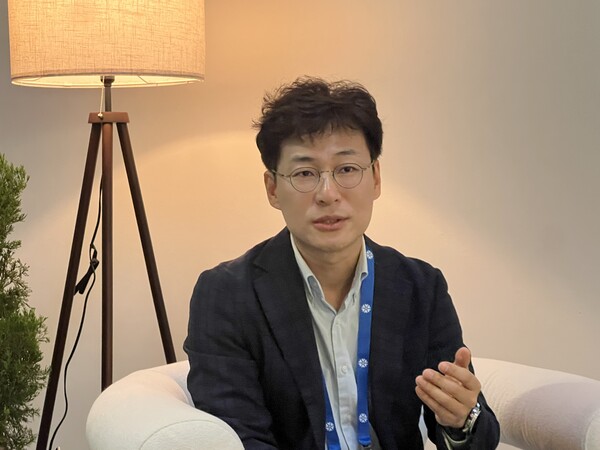
Ahn Soon-sik (안순식), who oversees supply chain management (SCM) at food company Pulmuone, drew attention by sharing a case of applying AI to SCM on Snowflake’s platform with participants.
Unlike front-end systems such as marketing or sales, SCM is back-end software that runs behind the scenes at companies. Snowflake explained that cases of applying AI as deeply as Pulmuone at the back-end level are not common not only in the food industry but also across SCM overall. That situation also influenced Pulmuone’s appearance on the Summit stage.
After the session presentation, Ahn met separately with Korean reporters and shared the background, process, results and plans for the SCM intelligence project.
First, it is necessary to look at the characteristics of SCM in the food sector.
According to Ahn, fresh food has a short shelf life, so even a small error in demand forecasting leads to inventory piling up, and options narrow rapidly in the order of price cuts, transfers and disposal. He said, "The electronics or auto industries do not throw products away just because they did not sell right away, but for food the impact of disposal is direct," adding, "The impact of SCM-related decision-making on corporate profitability is growing."
Complexity grows further when operating overseas subsidiaries. With capabilities such as demand analysis, inventory risk, supply planning, profitability assessment and scenario analysis concentrated at headquarters, it is difficult to deliver such expertise to overseas local staff on an ongoing basis. Time zone differences are also a major issue. Pulmuone’s SCM team saw AI agents as an alternative to solve these problems rather than relying on people. He said, "Agents allow local teams to ask questions 24 hours a day, so it is far more efficient than having people provide support."
The implementation process was not as easy as expected. The most difficult part was data cleansing. It took more than six months to convert and refine data in the SCM system into something AI could properly use. Ahn said, "Field names differed by system. Some systems stored the same item code as 'item', others as 'item_code', and still others as 'IMP'. The number of digits also varied," adding, "We had to standardise data like that. If you use it as-is, when you ask AI, the answers come out completely differently."
Converting existing data into so-called AI-ready data that can be used for AI is hard to make effective without involving people who understand the work. Ahn said, "You need domain knowledge, and you also need the capability to communicate smoothly with multiple departments."
A lack of business context was also a task during the project. He said it is important to prepare in advance so that AI can properly understand the company’s business to obtain correct answers from AI. That was also why there were many responses early in the project that the answers were not correct when an AI agent was created and provided to front-line teams.
Pulmuone therefore separately organised general SCM job knowledge, Pulmuone’s shared business terminology and internal reporting materials and built them as a knowledge layer. Ahn said, "Using an Anthropic-based knowledge management system within Snowflake’s platform, we split general industry knowledge and Pulmuone domain knowledge into 2 layers and loaded them into the agent."
He also said, "Competitive advantage is not perfect forecasting but the ability to respond faster and more completely when plans and reality diverge," and stressed that "the hard part is not connecting models but teaching the agent how this business thinks."
Raising the level of analysis was also a challenge. AI had to go beyond answering simple questions and produce business-meaningful outputs. To do this, Pulmuone shifted to embedding the analysis framework itself into the agent.
Ahn said, "When a signal is detected, it analyses in order where it occurred, why it occurred, whether it is a temporary issue or a structural issue, whether it is a price policy issue in a specific channel, and whether it is a lifecycle issue," adding, for example, "If a certain SKU (Stock Keeping Unit) is discontinued, it presents scenarios covering the impact of remaining inventory, changes in production schedules, cost reallocation and changes in overall profit and loss."
According to Pulmuone’s own tests, AI analysis conducted in SCM matches the data on Snowflake at a level of 100 percent. Work to shift the data modelling structure also became much faster than before. Ahn said, "What would have taken months in the past, we completed the modelling shift for our domestic, Japan and U.S. entities in 3 weeks using Coco, Snowflake’s coding agent."
Pulmuone’s SCM intelligence project is currently under way. Getting more working-level staff in the field to use it more is also a key task. Ahn said, "This year, an important goal is to let employees know these functions exist and have them experience them as much as possible," adding, "Ultimately, the SCM agent will head toward self-healing, where AI automatically adjusts plans when there is market volatility."
Ahn said that even if self-healing becomes a reality, it would not be easy to remove people. He said, "The final responsibility still rests with people, so people will continue to be in the middle," adding, "But the move to make work people used to do more efficient through AI will continue."
 Chi-gyu Hwang
delight@d-today.co.kr
Chi-gyu Hwang
delight@d-today.co.kr