
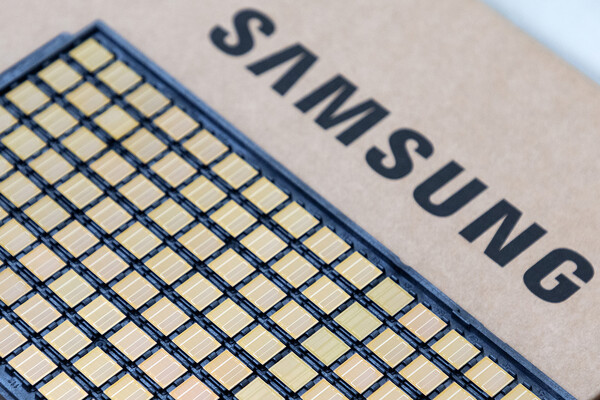
Samsung Electronics ranked No. 1 in the automotive memory market in 2025, overtaking Micron.
On June 1 local time, major foreign media outlets including online publication Gigazine reported that S&P Global Mobility said Samsung's share of the automotive memory market rose to 40 percent in 2025 from 35 percent in 2024. Micron's share, which had led the market, fell to 36 percent from 40 percent over the same period. That changed the market leader in automotive memory.
The change in ranking is seen as the result of Samsung's regional expansion and shifts in product demand working together. Samsung expanded its business in the fast-growing Chinese market in addition to established auto markets in Europe, South Korea and Japan. Rising demand for high-capacity, high-performance memory used in autonomous driving systems and advanced in-vehicle infotainment systems also helped lift its share.
Samsung entered the automotive memory market in 2015. At the time, it targeted high-performance infotainment systems and the autonomous vehicle market with low-power memory solutions, including LPDDR and UFS. It then quickly applied automotive SSDs and graphics DRAM to mass-produced vehicles, accelerating its push into the global premium market centered on autonomous driving.
Samsung highlighted a high-durability design for its automotive SSDs to withstand shock, vibration and temperature changes. The product line also received a CES Innovation Award that recognizes outstanding products. With reliability and durability assessed as more important for automotive electronic components than for general consumer semiconductors, Samsung has also secured design capabilities tailored to the vehicle environment, not just performance.
The market has also grown sharply. S&P Global Mobility said Samsung recorded average annual revenue growth of more than 40 percent in the automotive memory market from 2020 to 2025. With overall demand for automotive semiconductors rising, Samsung appears to have boosted its growth pace with a portfolio centered on high-performance memory.
The market's importance is rising as vehicles become more software-driven and electronic systems more advanced. More memory and higher performance are needed as autonomous driving functions increase and in-vehicle displays and infotainment features become more complex. Samsung's share gains are closer to a response to the trend toward higher specifications in automotive semiconductors than to a simple increase in supply volume.
Broader memory market conditions are also creating an environment favorable to the automotive market. Gigazine reported that memory prices continue to rise on demand for artificial intelligence. It cited an assessment that memory is worth more than oil as of 2026, pointing to the fact that the corporate values of the top three memory companies, including Samsung, Micron and SK Hynix, are higher than those of the top three oil companies.
The competition for leadership in the automotive memory market is expected to intensify. Samsung is widening its foothold in major auto markets including China, and Micron is also likely to move to defend its share based on its existing strengths. As automotive memory establishes itself as a foundational component for autonomous driving and vehicle software competitiveness, future shifts in market share are expected to affect the competitive landscape of the semiconductor industry.
 Jinju Hong
hongjj@d-today.co.kr
Jinju Hong
hongjj@d-today.co.kr