
The government will expand support for artificial intelligence (AI) talent development at regional universities. It will select additional non-capital-area universities as AI hub universities and pursue an AI research support programme for early-career researchers with a regional focus.
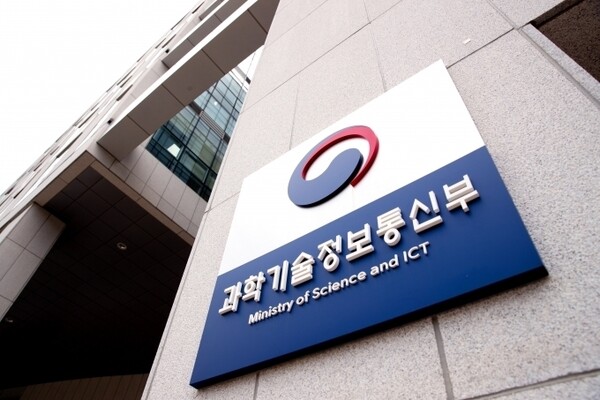
The Ministry of Science and ICT said on May 28 it will add 8 non-capital-area universities this year as beneficiaries of its "AI hub university" programme. It also said it will 추진 its "AI Star Fellowship" programme centered on regional universities.
AI talent development support programmes have so far been relatively concentrated at universities in the capital area. Regional universities have fewer resources such as research and education infrastructure than those in the capital area, which has tended to skew selections toward the capital area during competitive selection processes.
The ministry will expand opportunities for regional universities to participate in AI talent development support programmes to support balanced regional development and a region-led national AI transformation. It will select 8 additional regional universities in the second half of this year. The additional selection notice will be issued at the end of next month. Selected universities will receive up to 8 years of funding of 3 billion won per year to help innovate their AI education systems.
It will also pursue the AI Star Fellowship programme to strengthen AI research capabilities at regional universities. The programme supports creative and challenging AI research by early-career researchers, including postdoctoral researchers or faculty members within 7 years of their first appointment.
The ministry plans to designate a regional university as the lead research institution to ensure participation opportunities for non-capital-area universities. It will also allow other universities and companies to participate as joint research institutions to encourage exchanges and cooperation.
New projects this year will be pursued under 2 tracks: a "region-led industry-academia cooperation track" reflecting industry demand, and an "interdisciplinary foundational technology track" aimed at creating research cooperation and synergy between universities. It will announce a total of 20 projects, 10 under each track, on May 29. Selected projects will receive research funding of 2 billion won per year for up to 6 years.
Bae Kyung-hoon (배경훈), deputy prime minister and minister of science and ICT, said, "For the Republic of Korea to make a leap to become a true leading AI nation, it is important that all regions have strong AI capabilities." He added, "We will support non-capital-area universities so they can build leading AI education and research systems and lead a balanced national AI transformation."
 Jin-ho Lee
jhlee26@d-today.co.kr
Jin-ho Lee
jhlee26@d-today.co.kr