
Domestic artificial intelligence (AI) models are being used across public administration, from government R&D budget reviews to care for elderly people living alone.
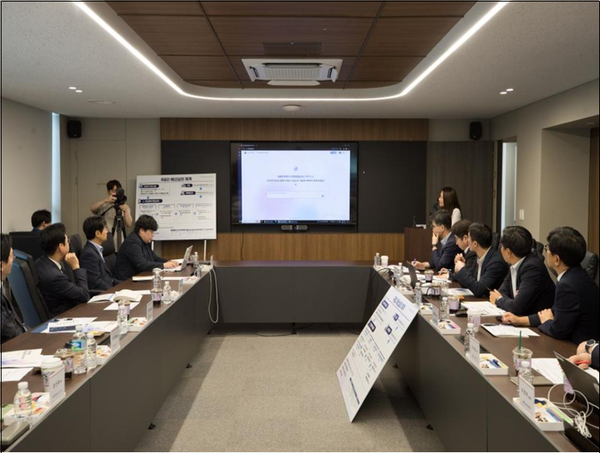
On May 26, the Ministry of Science and ICT said it is integrating homegrown AI models developed by domestic companies such as Upstage, LG AI Research and Naver into central and local government administration.
Upstage's proprietary AI model will be deployed for national R&D budget deliberations. The AI will analyse and organise research project materials and budget details, taking on a role aimed at improving the professionalism and efficiency of the reviews. It provides functions including similarity and duplication analysis, automation of administrative processes, draft generation and collaboration support.
Domestic AI models have also been introduced to the government-wide administrative network's "AI common foundation for all government". The platform, jointly built by the Ministry of Science and ICT and the Ministry of the Interior and Safety, allows central and local governments to jointly use a range of AI models.
The government and AI companies will also push to develop science-specialised AI models in strategic technology fields such as biotechnology and semiconductors through the "K-Moonshot" initiative. The goal is to solve scientific challenges in areas including new drug development, next-generation semiconductors and nuclear fusion.
A national AI competition using K-AI models as a platform will also be held this year. It will be run in four categories: the general public; elementary, middle and high school students; university students and researchers; and digitally vulnerable groups. The government will review ways to link outstanding cases to commercialisation and to business creation and start-ups.
In public safety, an "AI Safety Report" based on LG AI Research's EXAONE AI model will be developed. In cooperation with the Ministry of the Interior and Safety, a pilot service will be pursued within the year and used for disaster prevention, detection of facility risks and analysis of abnormal signs.
Adoption by local governments is also expanding. Paju City has introduced LG AI Research's AI model into civil complaint handling and administrative services. Busan City has developed an "AI Bugi" assistant manager based on Naver's AI model and is applying it across administration.
In elderly care, the "Naver CareCall" service based on Naver's AI technology is being used. It makes regular check-in calls to elderly people living alone and others to assess their health and emotional condition. It is currently provided to about 50,000 people at more than 160 institutions, including the Seoul Metropolitan Government, the Busan Metropolitan Government and the Gyeonggi-do Social Service Agency. It was found to have generated about 34 billion won in social value in 2025, and results showing reduced depression and improved memory function in seniors with dementia were published in an international academic journal.
Ok Sang-hoon (옥상훈), care call business strategy leader at Naver Cloud, said he hopes it will serve as a social safety net that reduces blind spots in social care and stays by people's side more often. He said there are plans to expand it to a range of public service areas including links between regional care and healthcare.
 Seulgi Son
sageson@d-today.co.kr
Seulgi Son
sageson@d-today.co.kr