
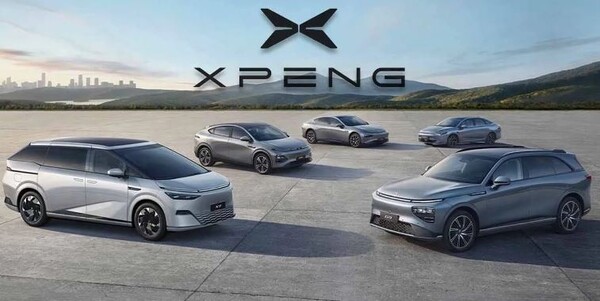
[DigitalToday reporter Hyunwoo Choo] Chinese electric vehicle maker Xpeng presented human-like driving judgments and fast local adaptation as strengths of its VLA 2.0 autonomous driving system.
On May 24 local time, EV outlet CleanTechnica reported that Xpeng said it is delivering more natural driving than rule-centred approaches based on its in-house Turing AI chip and simulation training system.
Xpeng explained that VLA 2.0 is not simply mimicking a human driver’s behaviour but is closer to reading road situations in advance and making context-aware judgments. It cited reduced loss, fast response, human-like performance and the emergence of intelligence as key advantages.
The new GX applies up to 3,000 TOPS of computing performance. Xpeng said its in-house Turing AI chip can process more information inside the vehicle without going through external sources. It said this structure underpins more human-like interaction with the physical environment.
Xpeng said it sees the existing long-form language model approach as potentially inefficient when handling unstructured data in the physical world. It said an approach of watching, trying and adapting, like a child learning to throw a ball, is better suited to real driving environments. Xpeng estimated that the consumption of inference tokens inside vehicles based on physical AI is about 80 times China’s nationwide daily digital AI processing volume.
It also differentiated its localisation approach from existing autonomous driving. Xpeng said that when applying what it learned on China’s complex roads to road environments in other countries, there is no need to rewrite rules to match local regulations or to newly collect large-scale local data. It designed the system to adapt to road environments based on information obtained from the driver and surrounding vehicles, without relying on HD maps.
Xpeng said its 'X World' simulation also speeds learning of country-specific rules and road conditions. X-Cache, which it recently unveiled, is a training-free control logic that updates cache contents in real time during generation. Xpeng said it achieved a 71 percent block-skipping rate and a 2.6 to 2.7 times improvement in inference speed, with almost no loss in visual quality. It added that the increased computing headroom is devoted more to perception and decision-making.
Xpeng said it will continue to advance its autonomous driving technology. It said it aims to train more strongly in digital environments and drive more stably on real roads.
 Hyunwoo Choo
cookinpapa@d-today.co.kr
Hyunwoo Choo
cookinpapa@d-today.co.kr