
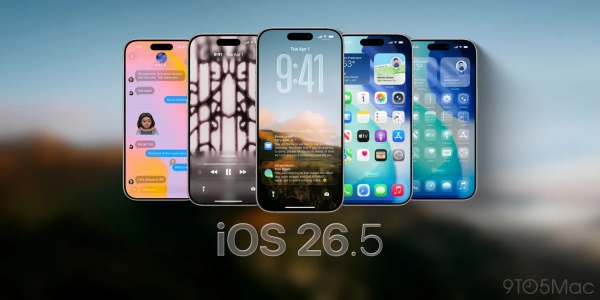
Apple has rolled out updates across its platforms, including the iPhone operating system iOS 26.5. The centerpiece of the update is support for end-to-end encryption (E2EE) for RCS messages. As encryption expands beyond iMessage into some regular text conversations, some are assessing that Apple’s messaging strategy is also showing signs of change.
Major foreign media outlets such as Ars Technica and 9to5Mac reported on May 11 that Apple released iOS 26.5 alongside iPadOS 26.5, macOS 26.5, watchOS 26.5, tvOS 26.5 and visionOS 26.5.
The most notable change is the introduction of an encrypted RCS beta in the Messages app. Apple said that starting with this version it supports end-to-end encryption for messages based on the RCS standard. That means green-bubble messages, previously treated like SMS, can in some environments offer iMessage-level security and privacy protection.
The rollout is limited. Only some mobile carrier users can currently use it, and Apple said it plans to expand support step by step. In the Messages app, a lock icon appears on conversations where encryption is applied, and the absence of the icon means that even RCS messages are not encrypted.
The industry views the move as a signal of a shift in Apple’s messaging platform strategy. Apple has maintained an iMessage-centered ecosystem, but analysis says it is gradually widening support for RCS features amid global regulatory pressure and expanding user demand.
The update also improves the user experience. iOS 26.5 adds a new downloadable “Pride Luminance” wallpaper. It features an animation effect with multiple colors moving and spreading.
Apple Maps has also been strengthened in some areas. The Maps app adds a feature that recommends places based on popular nearby locations and recent search history. This is seen as a move to expand local exploration and search while also increasing usage of its mapping service.
Default apps and accessory integration have also been improved. Some functions in the Reminders app were modified, and the Magic Mouse, Magic Keyboard and Magic Trackpad were changed to pair automatically over Bluetooth after a USB-C connection.
The update includes region-specific changes. In the European Union, features related to Live Activities support for third-party accessories were added, and in Brazil, a foundation for supporting installation of external apps was reported to have been partially put in place. This is viewed as a measure to respond to changes in regulatory environments in different countries.
Moves to monetize Apple’s mapping service are also being detected. The company said it plans to begin showing ads in map search results in the United States and Canada from later this summer. While it is not applied directly in this update, analysis says preparations for an advertising business on the Maps platform are under way alongside the expansion of recommendation features.
The update is being assessed as focused more on stabilization and foundation work than on adding large-scale new features. Ars Technica analyzed that iOS 26.5 is likely to be one of the last major updates for the current generation of operating systems.
The schedule for the next major update is also approaching. Apple plans to unveil the next-generation operating system iOS 27 at WWDC 2026 on June 8. An AI-based Siri overhaul and whether Apple will strengthen its Apple Intelligence strategy are cited as key points to watch.
The market is also watching the possibility that Apple may selectively adopt external models for AI features in the future. Apple previously mentioned the possibility of using Google’s Gemini model, but it has not yet disclosed the timing and scope of any actual rollout.
 Jinju Hong
hongjj@d-today.co.kr
Jinju Hong
hongjj@d-today.co.kr