
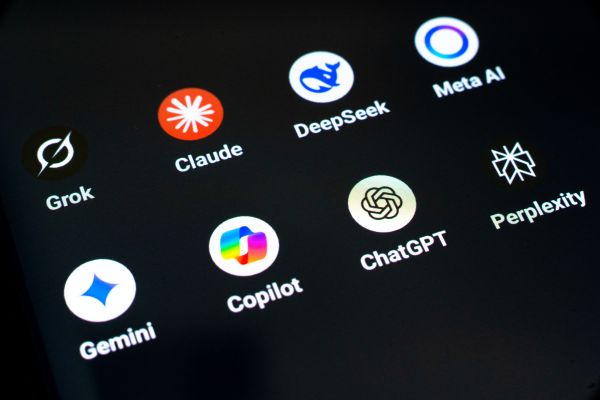
Major artificial intelligence (AI) companies are responding to a surge in demand by limiting service sign-ups or adjusting usage. As generative AI spreads, demand for high-performance reasoning has increased sharply, and analysts say existing subscription models are hitting their limits.
Business Insider reported on April 23 that Microsoft’s GitHub Copilot temporarily halted new sign-ups for its Student, Pro and Pro+ plans, and Anthropic tested limits on access to Claude Code for lower-priced paying subscribers.
The moves are seen as more than a simple operational issue, highlighting the burden built into the structure of generative AI services. AI companies initially attracted users with low-priced and accessible services, but complaints over usage caps and price increases have recently grown.
The pressure on companies is being driven by the spread of agent-style AI. Users are running AI models virtually 24 hours a day using automation tools such as OpenClo, consuming computing resources beyond what existing plans can handle. Joe Binder (조 바인더), GitHub’s vice president of product, said long parallel sessions were far exceeding what existing plans were designed for. He said some requests were increasingly common that generated costs beyond a plan’s price.
Anthropic is also facing similar pressure. The company tested whether to limit Claude Code features for users on lower-priced plans, then said it was in a testing phase and it would notify users before any major changes. Amol Abasare (아몰 아바사레), Anthropic’s head of growth, stressed that past plans were not designed with today’s long-running agent use environment in mind.
Experts say demand growth has far outpaced what companies expected. Gartner analyst Arun Chandrasekaran (아룬 찬드라세카란) said it was difficult to build a sustainable business structure with early 2022 models. He said companies face a double challenge of converting free users to paid plans while proving the value of high-performance, latest models.
Regional constraints in computing infrastructure are also a burden. Service quality and processing speed can vary depending on where data centres are located, and there is a structural limit to operating global demand as if it were a single resource. That adds concern that users in other countries could hit bottlenecks faster than users in the United States.
In this situation, AI companies have limited options. Proposed approaches include improving model efficiency, distributing requests, or adjusting user-by-user prioritisation. In the process, pricing policy and service access are emerging as key variables alongside technical competition.
OpenAI has also moved to retire older models. The company withdrew a plan to end 4o, an older GPT-series model, in August 2025 after user backlash, but ultimately ended the service in February 2026. It recently introduced a new image generation model and a cloud-based agent for some paying users, but last month announced the shutdown of Sora, a video generation app that had been popular.
The industry is increasingly assessing that AI competition will depend not only on performance, but also on how stably companies can secure and operate large-scale computing resources.
Ultimately, the generative AI market is rapidly shifting from a feature race to competition over infrastructure and profitability. Computing capacity that can keep up with service expansion and pricing models that can sustain it are emerging as key factors that will separate companies.
 Jinju Hong
hongjj@d-today.co.kr
Jinju Hong
hongjj@d-today.co.kr