
[Digital Today reporter Jinju Hong (홍진주)] Apple under CEO Tim Cook has been assessed as expanding its ecosystem through a range of products and services, rather than a single innovation like the iPhone.
In this context, IT media outlet NineToFiveMac on April 21 (local time) divided major products and services Apple has introduced since Cook took over into “best” and “disappointing” examples and summarized their achievements and limits.
The key is multi-layered expansion rather than one big hit. Apple has faced criticism that it has not created a single innovation on the level of the iPhone since 2007, but under Cook a strategy of growing multiple business lines at the same time has stood out. The outlet noted, “There was no iPhone-level moment, but it is hard to say Apple has stagnated since then.”
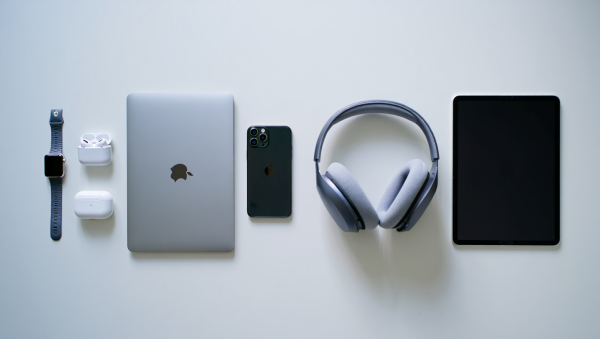
AirPods, Apple Watch and the transition to Apple Silicon were cited as representative examples. AirPods have effectively popularised the true wireless earphone market since launch and have been ranked as one of the most successful accessories in Apple’s history. Apple Watch overcame early scepticism and established itself as a health-management device, becoming deeply embedded in the daily lives of millions of users. The Apple Silicon shift for the Mac lineup was also assessed as changing the market standard itself by sharply improving performance and power efficiency in a short period.
Under Cook, Apple has expanded its product and services domains more rapidly. Starting with Apple Pay in 2014, Apple Watch, Apple Music, iPad Pro and Apple Pencil followed. It later expanded to AirPods, Apple TV+, Apple Arcade, Apple News+, Apple Card, M1-based chips, Apple Fitness+, Apple One, AirPods Max, iCloud+, AirTag, Vision Pro, Apple Intelligence and more.
Among them, AirPods, Apple Watch, M-series chips, Apple Pay, device continuity features and the App Tracking Transparency (ATT) feature were cited as top-tier products and services that changed the market landscape. The assessment was that these products and services have become established so naturally that users may not even feel the change while using them routinely.
Not every attempt was successful. Vision Pro was cited as facing an entry barrier due to an excessively high price despite the high completeness of its hardware and software, and the U.S.-resident-only Apple Card was cited as limited by its regional restriction. Apple Intelligence was also assessed as an early-stage service that still lacks completeness.
This assessment connects to the view that Apple’s competitiveness in the Cook era lies not in individual products but in “connectivity between products.” The analysis is that the ecosystem’s expansion hinges on a structure that strengthens the user experience as iPhone, Apple Watch and AirPods link organically. The outlet said, “The Cook era was not a time to reinvent the wheel, but a time to improve and popularise the foundation that Jobs created.”
Change also continued in the Mac business. Apple raised product competitiveness by redefining standards for laptop performance and power efficiency through its transition to in-house chips. This is assessed as a case of redesigning the overall platform beyond a simple component swap.
In the end, this assessment focused on whether to view Apple’s 15 years under Cook through the lens of a lack of post-iPhone innovation, or as a period in which it built a vast ecosystem through multi-layered product lines and service integration. NineToFiveMac ultimately assessed the Cook era as a successful transition, while noting that areas such as Vision Pro’s high price and the unfinished state of Apple Intelligence remain to be proven in future results.
 Jinju Hong (홍진주)
hongjj@d-today.co.kr
Jinju Hong (홍진주)
hongjj@d-today.co.kr