
[DigitalToday reporter Jinju Hong (홍진주)] Tesla has applied for permits to build two robotaxi-only Supercharger sites in Chandler and Mesa, Arizona. This is the first time a plan has been confirmed for charging infrastructure dedicated solely to autonomous vehicle operations.
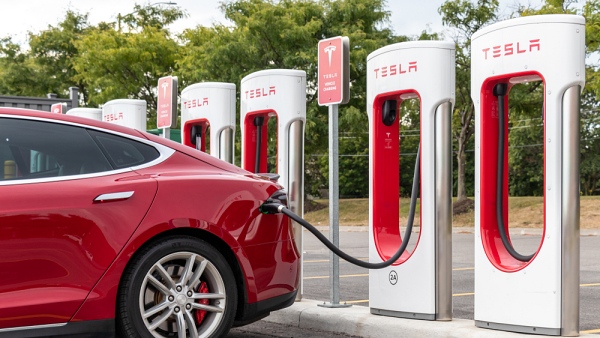
Electrek, an electric vehicle outlet, reported on Monday that the filings include plans to install V4 Superchargers that would not be open to the general public. The Chandler application includes building 56 V4 Superchargers at an industrial site near South Roosevelt Avenue, and a separate application was filed for 5349 E Main Street in Mesa. The two applications were submitted at the same time last week.
The key point is that the new charging sites would not be open to the public. Unlike about 7,000 public Supercharger locations worldwide, these facilities would not be accessible to ordinary users. If built as planned, they would become Tesla's first dedicated fleet charging hubs for robotaxi operations.
The locations also stand out. Chandler, Mesa and Tempe in Phoenix's East Valley are areas where Waymo first launched and expanded its autonomous ride-hailing service in 2018. Waymo currently operates about 3,000 robotaxis across 10 U.S. cities and handles about 500,000 paid rides per week. Mesa also hosts a Waymo production base where Magna modifies Jaguar I-PACE vehicles.
The Arizona filings also mark Tesla's second attempt at robotaxi charging infrastructure. Tesla pursued a charging hub at 825 Sansome Street in San Francisco in February that would accommodate more than 150 vehicles and provide 600 amperes of power, but it withdrew the plan on the day it was set to face a planning commission review. There was opposition at the time from the Teamsters union.
The new facilities are for the Model Y currently used for robotaxis. The Model Y charges using a standard plug-in method. The Cybercab, which had its first production batch in February, uses wireless inductive charging and requires separate infrastructure.
If a dedicated charging hub is built, Tesla would be able to centralise fleet vehicle charging, washing and maintenance in one place. But this stage is limited to permit applications, and it could take time before completion and operation.
Tesla has recently started robotaxi services in Dallas and Houston, expanding for the first time beyond Austin. But the service area was limited to about 25 square miles in Houston, and only a small number of vehicles are operating simultaneously across the three Texas cities. Many vehicles still carry a safety monitor. In Austin, fewer than 10 vehicles are operating in a fully unsupervised mode.
 Jinju Hong
hongjj@d-today.co.kr
Jinju Hong
hongjj@d-today.co.kr