
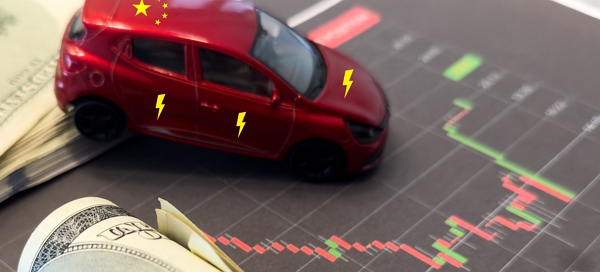
[DigitalToday reporter Jinju Hong (홍진주)] High gasoline prices are boosting electric vehicle sales worldwide, but concerns are growing that the United States could instead fall behind the trend.
InsideEVs, an electric-vehicle media outlet, reported on April 19 local time that Europe set new monthly records in March for both electric vehicle and plug-in hybrid (PHEV) sales, while sales growth is also continuing in Asia and Australia.
The key is the combination of high oil prices and supply. Colin McKerracher (콜린 맥케라처), head of clean transport at BloombergNEF, said consumer interest in EVs is higher than ever across nearly all indicators. He said sales are surging in markets where Chinese EV makers can support demand.
Southeast Asia and Australia were presented as representative regions showing that trend. They have abundant supplies of Chinese-made EVs and high dependence on crude oil from Persian Gulf producers. Singapore-based investor and energy researcher Alex Turnbull (알렉스 턴불) said that after checking BYD dealerships and others in Asia, some EVs had only a few days of inventory left and some models were on back-order. He noted that local EV adoption is accelerating at a surprising pace.
Europe is also seeing the same trend. Plug-in vehicle sales in Europe rose 72 percent from the previous month and 37 percent from a year earlier, Benchmark Mineral Intelligence said. Expanding government subsidies and rising fuel costs together pushed up demand.
By contrast, the U.S. market is showing that supply is not keeping up even as factors that stimulate demand have emerged. U.S. gasoline prices have topped $4 a gallon, but criticism is growing that automakers have weakened their ability to respond by scaling back EV plans. McKerracher said he is concerned about the U.S. market, adding that although factors that lift consumer demand have appeared, supply may not respond due to model cancellations and a broader retreat from EVs.
Actual sales indicators are also weak. U.S. first-quarter EV sales fell 27 percent from a year earlier and 8 percent from the previous quarter, Cox Automotive said. Citing Benchmark tallies, it said North American EV registrations in March were 121,500 units, the highest monthly figure since an early end to EV tax credits last September, but down 30 percent from March 2025, with year-on-year declines extending for a sixth consecutive month.
U.S. consumer interest is not weak. Auto trading platforms Cars.com and Edmunds tallied a sharp increase in EV searches. Hyundai Motor's chief executive officer also said EV sales rose 40 percent between February and March.
The problem is choice. Over recent months, automakers have shifted their focus toward internal combustion engine vehicles and successively shelved new battery-electric models. The Volvo EX30, Acura ZDX and Ford F-150 Lightning have been pulled from the market, and Honda also withdrew three planned models at the last minute. Even as consumer interest rises, the number of vehicles actually available for purchase has fallen. As McKerracher said, consumers "can't buy a car they can't find," and that remains a constraint on the U.S. EV market.
 Jinju Hong
hongjj@d-today.co.kr
Jinju Hong
hongjj@d-today.co.kr