
"Let’s do AX too. Prepare a related briefing." If a manager at a manufacturing site receives such an order, the first question is, "So if we do AX, is it a smart factory?" The conclusion is that they are not the same.
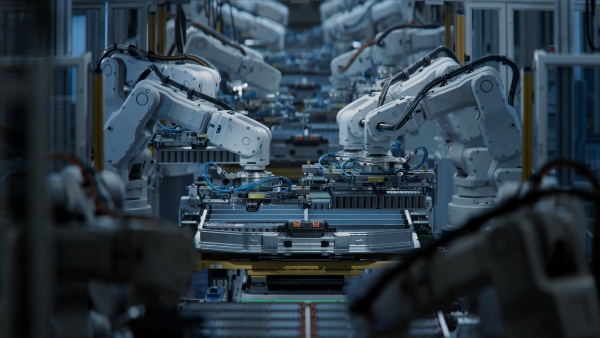
In the past, factory automation (FA) meant production equipment moved uniformly according to pre-defined programs. Production facilities did not actively make judgments, and the structure was optimised for small-variety, mass production. A smart factory can be seen as an evolved factory that adds IoT, big data and cyber-physical systems (CPS).
The Korea IR Council analysed that it has become possible to exchange information between facilities in real time, run simulations in a virtual space and automate ordering and receiving based on production conditions. At that stage, however, the role of data remains at the level of "collection and monitoring". When a process abnormality occurred, people had to look at the data, analyse the cause and decide a response.
AX, so-called AI transformation, diverges at that point. It is the stage where AI itself analyses process data to derive possible causes of abnormalities and even proposes solutions. The decisive difference is that AI performs judgment rather than people interpreting data. Borrowing LG Display’s expression, it is an "AX fab". If smart factories only went as far as replacing people’s roles with machines or systems, an AX fab is a factory that makes decisions based on process and equipment data and adds AI to realise intelligent, autonomous operations.
The conceptual difference shows up in numbers. LG Display introduced its in-house AI production system last year across all OLED processes. Results appeared from the design stage. After applying its in-house "edge design AI algorithm" to the curved-panel edge design of irregular-shaped displays, drawing generation time fell to 8 hours from 1 month. Previously, compensation patterns had to be designed manually in different shapes one by one to match the panel’s outer design, and if defects occurred, the work had to start over from the beginning.
After introducing AI, it automatically designed patterns needed for curved surfaces and narrow bezels, sharply lowering error rates. Optical design to optimise OLED colour changes by viewing angle also now finishes in 8 hours, down from work that took more than 5 days. AI carries out the entire process, from drafting to verification and proposals.
Changes on the manufacturing floor are bigger. AI trained on OLED manufacturing domain knowledge automatically analyses possible causes of abnormalities that could occur in the process and proposes solutions. The company also built a system in which AI automatically analyses real-time process data collected throughout the production process, writes reports and automatically puts equipment operations that cause abnormalities on hold. The time required to improve quality was cut to 2 days from 3 weeks, and expanding the production of good products generated annual cost-saving effects of more than 200 billion won. The company plans to develop it further into a stage where AI itself proposes productivity improvements and controls equipment.
◆FA→Smart factory→AX, the decisive difference is whether AI makes judgments
China is driving the transition at the national level. After defining manufacturing as a source of national competitiveness through the 2015 "Made in China 2025" strategy, it systematically compressed and pushed a three-stage transition over 10 years, from FA to smart factories and then AI-based intelligence. Key projects included smartifying major manufacturing processes and building digital worksites in priority industries.
The results are showing up in lighthouse factory numbers. Haier increased its WEF lighthouse factories to 13 this year after its Qingdao water filter plant was newly selected in January. It is tied for the world’s most with Schneider Electric. The Qingdao plant is characterised by fully integrating AI into all stages before water purification treatment. By applying AI algorithms and 32 digital technology solutions, it achieved a 40 percent improvement in quality, a 72 percent reduction in quality assurance costs and a 53 percent shortening of the average inventory storage period. According to the WEF, China has 84 lighthouse factories, accounting for about 42 percent of the world’s total. Even the combined total of the United States (32), Germany (18) and Japan (15) is 65, falling short of China.
Haier Chairman Zhou Yunjie (周云杰) said the fusion of AI and robotics technology is a strategic core for upgrading manufacturing and shaping future productive capacity, and said the company will invest more than 100 billion yuan over the next 5 years in basic technology areas including AI, semiconductors and IoT security. Haier’s speed of AI adoption stems from a corporate culture that goes beyond simple technology investment to boldly dismantle existing processes and rebuild them in new ways. Haier lighthouse factories previously selected by the WEF include a Shanghai connected washing machine plant and an advanced refrigerator plant, showing AI application is not limited to a specific product line but is spreading across home appliance manufacturing.
◆Where is our factory now?
Returning to the first question, AX is not a smart factory but the "next stage" of a smart factory. In a three-stage evolution of FA (automation) → smart factory (data-based active response) → AX (AI-based autonomous judgment), most domestic manufacturing companies remain in stages 1 to 2.
That means the first page of any briefing responding to an order to "do AX" should start by identifying which stage the factory is at. Self-diagnosis must come first for AI adoption to be possible. If a company already has a process data collection system in place, it can deliver short-term results by adding only an AI layer.
LG Display’s annual cost savings of more than 200 billion won were possible because it had years of accumulated OLED process data. By contrast, introducing AI when process data itself has not been accumulated limits the effect because there is no material to learn from. That is why it is difficult to skip building a smart factory and jump straight to AX.
The issue is time. As China compresses a three-stage transition over 10 years as a national strategy, if the pace of transition in domestic manufacturing lags, the technology gap will translate directly into a cost gap. Youngjoo Lee (이영주), head of manufacturing AI at LG Display, said "Chinese companies’ challenge is extremely fierce," and said "the most important means to secure a sustained competitive advantage is AI".
The government is also running a manufacturing AI-specialised smart factory support programme reflecting that sense of crisis, and last year launched a manufacturing AX (M.AX) alliance involving about 1,000 companies, universities and research institutions. The goal is to roll out 500 AI factories by 2030 and create more than 100 trillion won in added value.
 Daegeon Seok
d2dg@d-today.co.kr
Daegeon Seok
d2dg@d-today.co.kr