
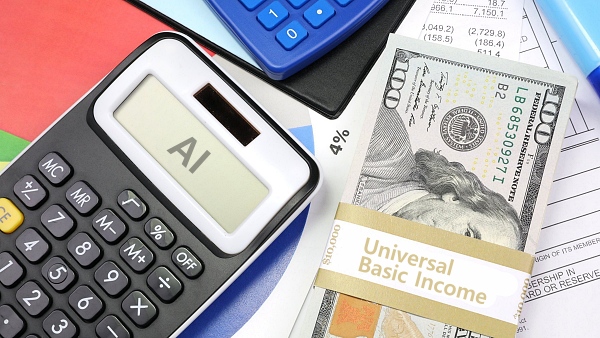
[Digital Today reporter Hyunwoo Chu] Elon Musk has proposed a universal high income paid by the government to all citizens as a solution to job losses caused by artificial intelligence.
Business Insider reported on April 17, local time, that Musk said in a post on X late on April 16 that the best way to respond to unemployment caused by AI was a government-paid universal high income. Universal high income is a more generous concept than basic income, which provides regular cash payments to every individual. It refers to income at a level that makes a prosperous life possible beyond basic expenses such as housing and food.
Musk also argued there would be no inflation because AI and robotics would create far more goods and services than the increase in the money supply.
Forecasts are also mounting that the AI shock could grow in the U.S. labour market. Boston Consulting Group projected this month that 10 to 15 percent of U.S. jobs could disappear over the next five years. The impact would be about 17,000,000 to 25,000,000 people. Goldman Sachs analysed last year that 2.5 percent of U.S. workers could be at risk of losing their jobs.
Some in academia have taken a positive view of Musk's argument. Karl Widerquist (칼 와이더퀴스트), a philosophy professor at Georgetown University in Qatar, said Musk was right in that basic income could be possible at a level beyond living costs. He cited lower funding burdens for basic income relative to gross domestic product due to the spread of automation, computerisation and AI.
He said low wages and stagnant pay were a bigger problem than unemployment. On inflation, he said Musk's prediction could become reality but it should not be taken as a certainty. Over the past 50 years, gross domestic product has grown sharply, but most of the gains went to the wealthy and poverty still remains, he added.
By contrast, James Ransom (제임스 랜섬), a researcher at University College London, said reskilling and retraining were a more realistic alternative. He said that if society could afford a generous universal high income, retraining and reskilling would also be possible. Even if many workers gain benefits from productivity increases in the coming years, building capabilities rather than receiving cheques would be necessary to obtain them, he said. He added that even when jobs are lost, properly implemented retraining can better preserve agency and self-esteem than basic income.
Musk offered a similar outlook on a podcast appearance earlier this year. He said advances in AI, energy and robotics could raise productivity and create the abundance needed to provide universal high income for everyone. He also argued that within 10 to 20 years it could become meaningless to set aside separate retirement funds.
 Hyunwoo Chu
cookinpapa@d-today.co.kr
Hyunwoo Chu
cookinpapa@d-today.co.kr