
As resentment grows in the United States over artificial intelligence and data centres, it is adding to the burden on OpenAI and Anthropic’s efforts to go public, and on Amazon, Google, Microsoft and Meta’s infrastructure expansion.
CNBC reported on April 15 local time that U.S. voters are increasingly seeing AI’s risks as greater than its usefulness.
OpenAI and Anthropic are pursuing listings based on high valuations. OpenAI in particular views data-centre expansion as a strategic advantage. If related infrastructure construction is blocked by local opposition, it could also affect its growth strategy.
The backlash has also led to actual crimes. Last week, a man was indicted on charges of throwing a lit Molotov cocktail toward the entrance gate of OpenAI CEO Sam Altman (샘 알트먼)’s home. The San Francisco district attorney’s office said the motive was hatred of AI technology. Daniel Moreno-Gama (다니엘 모레노-가마), a 20-year-old from Texas, faces charges including attempted murder and is also accused of threatening to burn down OpenAI headquarters.
Altman acknowledged there is deep anxiety around AI and urged people to moderate their language and level of response. He said technology is not always good for everyone, but also said technological progress can greatly improve the future. He recently suggested alternatives including a public wealth fund, a four-day workweek and reforming payroll taxes to tax automation.
Anthropic CEO Dario Amodei (다리오 아모데이) has warned that AI could cause large-scale disruption. The debate over AI is also spreading beyond the tech industry into the public sphere. In an NBC News poll in March, 57 percent of registered voters said AI’s risks outweigh its benefits, and a Quinnipiac University poll found 55 percent expected AI to do more harm than good in daily life. A Pew survey also found many respondents were more concerned than hopeful about expanded use of AI.
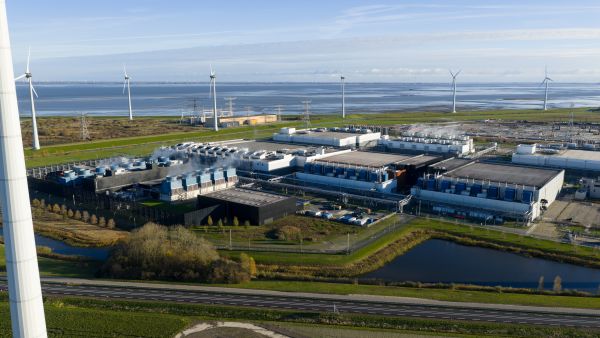
Opposition around data centres is also growing. Data centres and servers are core infrastructure for running AI, and these big tech companies decided to invest about 700 billion dollars in expansion in the United States this year. But data centres’ power demand has become an issue in state governments and local elections, leading to opposition and lawsuits.
DataCenterWatch figures show that in 2025 at least 156 billion dollars worth of data-centre projects were blocked or delayed by local opposition and lawsuits. Maine passed the first bill on April 16 to ban data centres across the state, putting it ahead of the governor’s signature. In the St. Louis suburb of Leicester, Missouri, voters defeated several city council members who supported a plan to build a data centre.
This mood could also affect the success of a listing. OpenAI Chief Financial Officer Sarah Friar (사라 프라이어) said the company plans to allocate part of an initial public offering to retail investors. She cited SpaceX and said she hopes retail investors will also own ChatGPT.
 Jinju Hong
hongjj@d-today.co.kr
Jinju Hong
hongjj@d-today.co.kr