
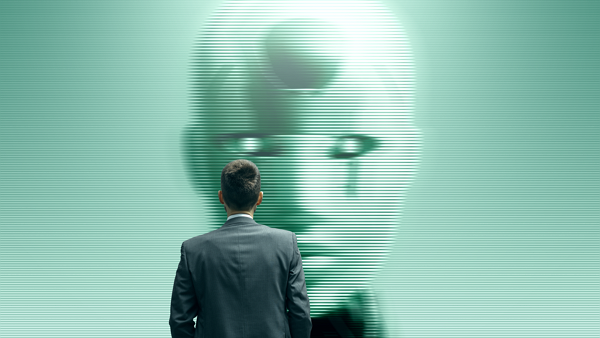
A diagnosis has emerged that the spread of artificial intelligence (AI) has already entered an irreversible stage, and that key projections raised only a few years ago are materialising.
Business Insider reported on April 10 that Mo Gawdat (모 가댓), who previously worked at Google X, said in a recent interview that 3 AI-related forecasts he presented in 2020 are unfolding in reality. He cited the irreversibility of AI adoption, the expansion of machine decision-making and the possibility of replacing human capabilities as major trends.
Gawdat defined the spread of AI as an unavoidable competitive structure. He stressed that "AI is inevitable and there is no way to stop it." He likened the situation in which countries and companies competitively adopt the technology to an "AI arms race." He said that once the technology has already proven its usefulness, adoption has entered a stage that cannot be reversed.
He also saw the scope of decision-making handled by machines widening in this process. AI systems are already deeply involved in people's everyday actions. Gawdat said, "If someone is watching this video we are recording now, it is because AI recommended it to that person." He argued that as AI already in daily life, such as recommendation algorithms, grows at a faster pace, it could take over decisions in areas that humans find difficult to handle.
Gawdat also pointed out that AI is surpassing humans in certain tasks. He cited the 2017 example of AlphaGo Zero, saying a system that learned without human involvement exceeded the previous top level in a short period. He assessed that recent AI is also rapidly accumulating knowledge based on vast data and neural networks and is approaching the human level.
Such changes were expected to affect the labour market. Gawdat said that as AI replaces analysis and technology-focused work, humans' roles could shift toward judgement, ethics and relationship-centred tasks. He also warned that if automation expands, unemployment could rise sharply in some fields.
Another shock that AI could create was cited as a collapse in information trust. Gawdat said, "As AI-generated content surges, a situation may come where it becomes difficult to distinguish what is real." He expressed concern that this could affect trust in the media, institutions and between individuals.
He cited recent large-scale layoffs in the tech industry and a blackout, and an incident in which 120,000 Amazon orders were lost as a result, and said such confusion is only in its early stages. If the economic system and information networks come under pressure at the same time, society may have to reorganise the very standards of work, values and truth, he said.
Still, he stressed that the core of short-term risks lies not in the technology itself but in how it is used. Problems could grow if AI is used to spread disinformation, for surveillance or to amplify conflict. Ultimately, he said, the outcomes AI brings depend more on humans' choices in handling it than on the speed of technological progress.
 Jinju Hong
hongjj@d-today.co.kr
Jinju Hong
hongjj@d-today.co.kr