
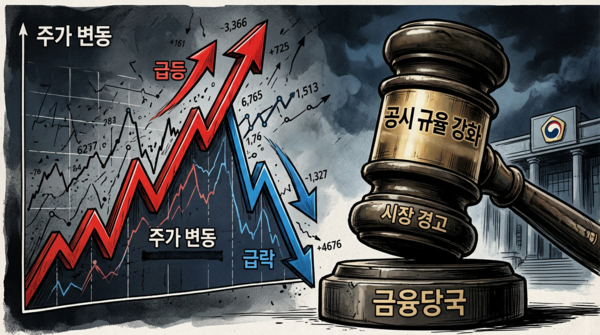
South Korea's Financial Supervisory Service has begun an overhaul of disclosure practices across pharmaceutical and biotech companies after the Samchundang Pharm controversy. Financial authorities see a practice of companies first announcing contract results or business outlooks through press releases while delaying or avoiding formal disclosures as having added to investor confusion.
The FSS on April 10 held a launch ceremony for a task force to pursue comprehensive improvements to pharma and biotech disclosures and discussed the need for reform and the direction of future work.
The task force is expected to focus on correcting repeated issues in the sector, including exaggerated achievements, inflated positive information and opaque disclosure practices centered on press releases.
Through the task force, the FSS plans to review existing disclosure formats such as periodic reports, business reports and securities registration statements, as well as guidelines for media press releases.
The guidelines could include specific language companies should refrain from using and items they must include.
In the background is an information asymmetry problem unique to the pharma and biotech industry. Clinical trial progress, technology-transfer contracts, approval reviews, projected sales and estimates of market size directly affect investment decisions. The heavy use of technical terms and complexity have led to criticism that retail investors find it difficult to accurately understand their meaning.
The problem is that some companies have repeatedly promoted information that raises expectations while failing to fully explain core conditions, assumptions and uncertainties needed for investment decisions.
Financial authorities are expected to revise standards to narrow gaps between new drug development plans and actual research and development capabilities, and to improve the effectiveness of a system that has remained at the level of formal disclosures.
Samchundang Pharm has been at the center of recent controversy. The Korea Exchange on March 31 gave advance notice it would designate Samchundang Pharm as an unfaithful disclosure company for failing to make a fair disclosure related to outlooks or forecasts for operating performance.
The exchange took issue with Samchundang Pharm distributing a press release on Feb. 6 about overseas performance forecasts for its product without going through formal disclosure procedures.
Critics said investors did not receive information verified under the same regulatory framework because the press release came before a formal disclosure.
A licensing agreement with a U.S. company that Samchundang Pharm announced on March 30 was also cited as a case that increased market doubts. The counterparty was not disclosed, and the structure presented would give Samchundang Pharm 90 percent of the partner's revenue if commercialization occurs, raising questions over the deal's substance and sustainability.
The share price moves were also sharp. Samchundang Pharm shares surged to 1,184,000 won on March 30 from around 244,500 won at the start of the year, then fell to 504,000 won on April 9.
Investor sentiment was further shaken by a plan by Chief Executive Jeon In-seok (전인석) to sell a large stake. Jeon disclosed that he would dispose of shares worth about 250 billion won in after-hours trading from April 23 to May 22, and said it was to pay taxes.
Samchundang Pharm withdrew the plan as controversy grew over the major shareholder's sale, but share price volatility continued. The market said investment decisions became more difficult as formal disclosures, press releases and the major shareholder's trading plan overlapped in the same period.
Some in the market said the episode recalled past cases involving Shinpung Pharm and Sillajen. They said Samchundang Pharm resembled those cases in that share prices surged on expectations of new drug development, then investor anxiety grew as major shareholders sold and clinical uncertainty overlapped.
Ultimately, the key to improving pharma and biotech disclosures is not to block expectations but to more clearly show the basis for them.
Attention is focused on whether discussions in the task force launched that day can reduce regulatory gaps between press releases and formal disclosures and build a disclosure system that allows investors to read actual risks and conditions.
Separately, the Financial Services Commission in December last year, through measures to enhance trust and innovation in the KOSDAQ market, set strengthening investor protection and restoring market trust as key tasks.
The market interprets the FSS effort to improve pharma and biotech disclosures as a step in line with the government's push to enhance trust in KOSDAQ, because the sector accounts for a large share of the market.
A financial investment industry official said, "As the pharma and biotech sector has high growth expectations, if information asymmetry increases, investor losses can also expand," adding, "The launch of this task force can be seen as a move to overhaul market discipline in step with the government's policy to enhance trust in KOSDAQ."
 Oh Sang-yup
yub@d-today.co.kr
Oh Sang-yup
yub@d-today.co.kr