
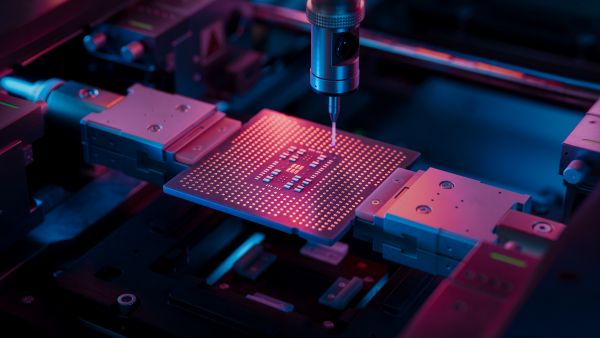
A sharp rise in memory prices is shaking up PC replacement strategies at corporate IT departments. The standard approach of mass replacements every 3 to 5 years is weakening, and a shift toward selective replacements based on actual usage data is spreading.
Tech outlet TechRadar reported on April 9 that RAM's share of PC manufacturing costs has risen to about 35 percent from 15 to 18 percent a few months earlier. As a result, replacement quotes for companies are 30 to 60 percent higher than before. Volatility has also increased, with the validity period for supplier quotes shrinking to a matter of hours. Analysts warned that if manufacturers continue passing on higher component costs driven by demand for AI systems, PC prices could rise 15 to 20 percent in the second half of 2026.
The biggest change is a move away from replacing devices in bulk based on set lifecycles, toward selecting replacement targets based on actual usage. Replacing equipment every 3 to 5 years used to be common. Recently, firms have begun choosing which devices to replace based on work data such as CPU usage, memory demand and application usage patterns, rather than purchase date. More cases now involve not only IT departments but also finance, procurement and security teams working together to reset the criteria.
Real-world cases also show the impact. A financial institution planned to replace about 7,000 laptops a year, but cut the number of devices that actually needed replacement to about 600 after analyzing usage data. Another company found that about 1,400 users could do their work on lower-spec machines out of a plan to replace about 5,000 devices, creating room to save about $1 million.
The analysis also shows that performance problems are not necessarily caused only by insufficient hardware. Inefficient software or unnecessary background processes often create bottlenecks. It found that removing unused programs alone can improve performance while cutting costs.
Extending device lifespans is also a key response. Forrester's analysis of a financial institution operating 40,000 devices found that extending the life of about 40 percent of its devices from 4 years to 5 years reduced the annual replacement rate to 23 percent from 25 percent. Over 3 years, it could avoid about $2 million in hardware costs.
Companies are also trying to change their computing structures. Using virtual desktop infrastructure, or VDI, or desktop as a service, or DaaS, to process computing on central servers reduces the need to provide every employee with a high-spec PC. It is being applied on a limited basis to jobs where local performance matters, such as developers and engineers.
Procurement strategies are also shifting. Companies are moving toward spreading upgrades in line with actual demand, rather than replacing large volumes at once. The rollout of AI PCs is also being reviewed in the same context. Because perceived benefits may be limited outside some high-performance tasks, more firms are deciding whether to expand after pilot deployments.
The industry calls the situation 'RAMgeddon'. As memory price volatility increases, PC replacement has become harder to manage on a fixed cycle, and flexible operating strategies based on actual usage data have emerged as a key task.
 Jinju Hong
hongjj@d-today.co.kr
Jinju Hong
hongjj@d-today.co.kr