
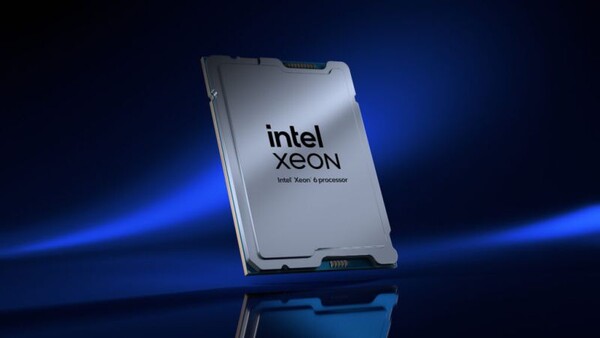
Intel and Google have formalised a multi-year cooperation to build next-generation AI and cloud infrastructure. The two companies will continue the partnership to strengthen the roles of CPUs and application-specific integrated circuit (ASIC)-based infrastructure processing units (IPUs) as heterogeneous AI systems spread, they said on Thursday.
The cooperation stems from the view that as AI infrastructure becomes more advanced, reliance on CPUs is increasing for orchestration, data processing and system performance. Google Cloud has adopted Intel Xeon processors across various workload-optimised instances, including C4 and N4 instances powered by the latest Intel Xeon 6 processors.
The platform handles everything from large-scale AI training tuning to latency-sensitive inference and general-purpose computing. The company said the cooperation will focus on improving performance, energy efficiency and total cost of ownership across Google’s global infrastructure over multiple generations of Xeon processors.
The two companies will also expand joint development of ASIC-based IPUs. An IPU is a programmable accelerator that shares networking, storage and security functions that would otherwise be handled by the host CPU. This can raise utilisation and efficiency and improve performance predictability in hyperscale AI environments without increasing system complexity. Xeon CPUs and IPUs operate as an integrated platform that provides general-purpose computing and infrastructure acceleration functions.
Intel Chief Executive Lip-Bu Tan (립-부 탄) said, "Scaling AI requires more than accelerators, and balanced systems are essential. CPUs and IPUs play a key role in providing the performance, efficiency and flexibility required by modern AI workloads."
Amin Vahdat (아민 바흐다트), senior vice president and chief technology officer for Google AI Infrastructure, said, "Intel has been a trusted partner for nearly 20 years, and Intel’s Xeon roadmap has given Google confidence that it will be able to continue meeting the growing performance and efficiency requirements of its workloads."
 Daegeon Seok
d2dg@d-today.co.kr
Daegeon Seok
d2dg@d-today.co.kr