
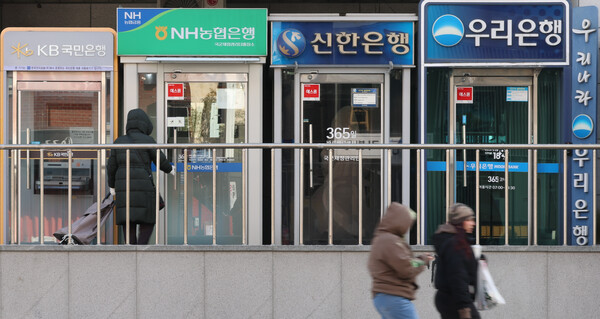
Seoul has begun procedures to pick the next city treasury bank to manage 51 trillion won in funds, raising tensions across the banking sector. The battle for the mandate goes beyond a simple treasury contract because it affects deposit growth, branding and competitiveness in institutional banking.
The city has begun selecting the next treasury bank through open competition as the current contract expires at the end of this year, the financial sector said on Tuesday. The selected bank will handle Seoul's revenue collection, payments and cash management for four years from 2027 to 2030. The first treasury covers the general and special accounts, while the second treasury handles funds.
Seoul plans to hold a briefing for proposals on April 9, accept proposals from May 4 to 6 and convene its treasury designation review committee in May to pick the highest-scoring institution for each treasury. Procedures will then continue with signing an agreement in June and building a collection system in the second half of the year.
Seoul's treasury mandate is widely seen as the biggest prize in the banking sector's institutional business market. With the city's confirmed budget this year at 51.48 trillion won, the scale of funds a designated treasury bank can secure differs from other local governments.
A designated treasury bank can stably secure more than 5 trillion won on average in low-cost deposits. If it is also linked to salary accounts for about 45,000 Seoul officials and transactions with affiliated agencies and partner companies, it can also broaden its retail customer base.
The symbolism of being the 'treasury bank of capital Seoul' cannot be ignored. It serves as a reference that boosts credibility in corporate finance and investment banking. That is why the market views the Seoul treasury business not as a simple profit venture but as a strategic investment to secure status.
DEFENDING OR RECLAIMING...SHINHAN VS WOORI SEEN AS MAIN RIVALS
The current landscape is expected to centre on a showdown between Shinhan Bank and Woori Bank. Shinhan Bank won the first treasury in 2018 and then took the second treasury in 2022, building an integrated treasury structure. Its main strengths are a dedicated IT system and settlement framework built over eight years, and operational continuity. It has already formed a dedicated task force since late last year and is fleshing out a defence strategy.
Woori Bank has more than 100 years of history operating Seoul's treasury, dating back to the days of the Gyeongseong treasury in 1915. It is assessed to have a strong internal sense of urgency to restore the symbolism after losing the mandate to Shinhan Bank in 2018. It is touting as a strength the fact that it currently runs 14 district treasuries among Seoul's 25 districts. It believes running both the city and district treasuries could improve cash flows and settlement efficiency.
Whether KB Kookmin Bank and Hana Bank join the race is also in focus. The two banks have not stated an official position, but competition could intensify further if they enter.
About 80 local governments nationwide are also set to select next treasury managers this year starting with Seoul, expanding banks' competition to win public treasury mandates on all fronts.
Incheon, with a budget of 15 trillion won, is seen as the next battleground, and there are expectations that Hana Bank, which relocated its headquarters to Incheon this year, will strongly pressure Shinhan Bank, the current treasury bank. Including large local governments such as North Gyeongsang and South Jeolla provinces, the total size of local government treasuries facing competition nationwide this year amounts to 170 trillion won.
REVISED CRITERIA...INTEREST RATES AND OPERATIONAL CAPABILITIES IN FOCUS
New evaluation criteria revised through an ordinance amendment will be applied to Seoul's treasury selection. Out of 100 points, the assessment reflects treasury work management capability (28 points), credit rating and financial stability (25 points), loan and deposit interest rates (20 points), convenience for citizens (18 points) and community contribution track record (7 points). In particular, the weight for demand deposit interest rates will rise to 8 points from 6, raising expectations of fiercer rate competition. The review committee will be made up of a majority of private-sector experts in finance and fiscal policy, IT and security, and accounting to improve fairness in evaluation.
Overall, the structure is shifting away from past competition centred on contributions to a framework that comprehensively evaluates interest-rate terms, system stability and administrative support capabilities. This means the outcome can be decided by how persuasive an operational model a bank presents rather than how much more it pays.
The problem is cost. The contribution Shinhan Bank presented to Seoul in 2022 was about 300 billion won, and including various operating costs, the actual burden is known to far exceed that by several hundred billion won. NH Nonghyup Bank and Hana Bank, which split the Gyeonggi Province treasury last year, also bore total contributions of 200 billion won.
If competition overheats, the size of contributions could rise further. There are also concerns that local governments are demanding high deposit interest rates and that banks could suffer negative margins if they misread the interest-rate trend and offer excessively high rates. Another variable is that even if banks secure low-cost deposits, the effect of improving net interest margins could be limited in a falling-rate environment.
A financial sector official said, "Seoul's treasury is a business that is difficult to approach as a simple profit." The official added, "It has great strategic value in terms of institutional business and brand."
Park Kyung-hwan (박경환), director general of Seoul's Finance Bureau, said, "Selecting the city treasury bank is about laying the foundation for operating Seoul's funds stably over the next four years." He added, "We will select the financial institution most suitable for city fiscal management through a fair and transparent evaluation process."
 Ji-young Lee
ljy@d-today.co.kr
Ji-young Lee
ljy@d-today.co.kr