
U.S. automakers are seriously reviewing an ultra-minimal strategy of stripping features to target the low-cost electric vehicle (EV) market around $30,000. The move contrasts with Chinese companies' low-price, high-spec push and is fueling debate in the market.
According to EV outlet InsideEVs on April 6, the core of the shift is not innovation that changes battery chemistry or manufacturing processes. It is lowering prices by removing unnecessary features from base trims. The so-called less-for-less approach minimises convenience and infotainment equipment in entry-level vehicles and reduces buttons and devices.
Dodge and new brand Slate are cited as examples. Matt McAlear (맷 맥앨리어), Dodge's chief executive officer, mentioned an analogue instrument cluster instead of a digital one at the New York auto show. "Do you really need a radio? Isn't it enough to have speakers that connect by Bluetooth?" he said. "People may feel uncomfortable, but it is meant to provide a need they did not know they had," he explained.
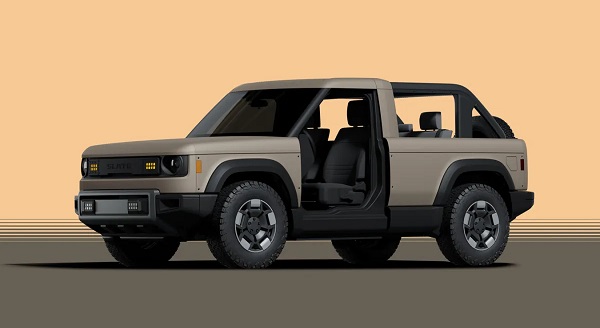
Slate more openly puts simplicity at the forefront. It targets consumers with an extremely simplified small electric pickup concept, featuring limited driving range, minimal exterior fittings and a simple structure centred on Bluetooth speakers. But as the price rises to around $30,000, its value proposition of whether it is cheaper by what it removes will face close scrutiny.
Competition becomes more complex around the $30,000 price range. Ford is preparing an electric pickup priced below $30,000 based on a new "universal EV" platform, but it is unclear whether it will delete basic features. Market reaction is expected to vary depending on where traditional U.S. automakers set the minimum standard for a $30,000 base-model electric car.
Chinese companies, by contrast, are pursuing a low-price, high-spec strategy by lowering the cost structure itself rather than deleting features. They lower prices while maintaining specifications through software-defined architecture, improvements in battery technology and vertical integration. InsideEVs said, "China is expanding its share in the global market with a strategy that lowers prices without cutting features."
Political variables are also a burden. U.S. President Donald Trump proposed early this year that Chinese automakers produce vehicles in the United States, but the outlook is that feasibility is low because of many conditions. In Congress, moves continue to block the inflow of Chinese EVs at the source. Republican Senator Bernie Moreno stressed that "there is no scenario in which Chinese cars enter the U.S. market," and Democratic lawmakers warned that while it could create jobs in the short term, it could lead to long-term job losses and a national security crisis.
An industry expert said the less-for-less strategy by U.S. automakers can secure price competitiveness in the short term, but risks being less appealing to consumers if it goes up against well-equipped low-cost Chinese EVs. The expert said the key will be how well it designs the balance between price and the core experience for an ultra-minimal U.S.-style EV strategy to survive in the market.
 Jinju Hong
hongjj@d-today.co.kr
Jinju Hong
hongjj@d-today.co.kr